Coordinating Specialty Care for Pediatric Neuromuscular Conditions
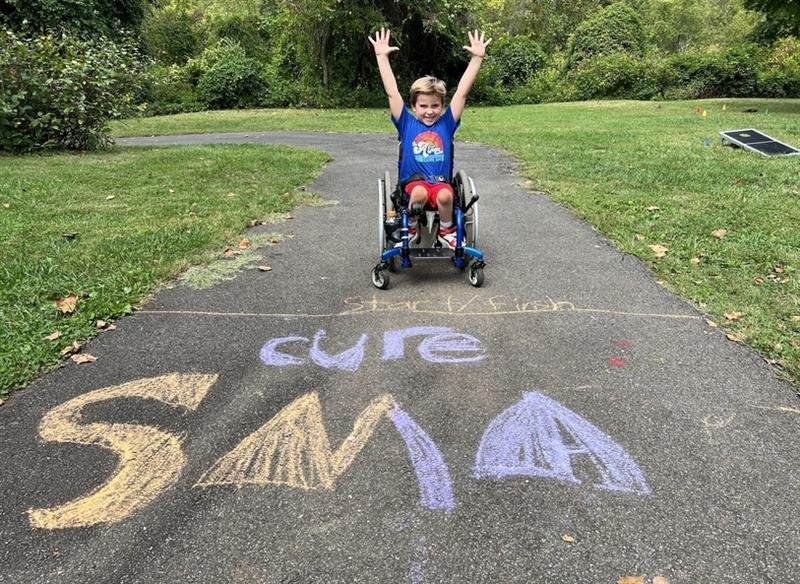
Every year, thousands of children are born with neuromuscular conditions like cerebral palsy, muscular dystrophy, spina bifida, or spinal muscular atrophy. The complications of these conditions can be wide-reaching, ranging from neuromuscular scoliosis, spasticity, developmental delays, and mobility concerns.
Caregivers are often under an extraordinary amount of stress, which is only made worse by managing multiple specialists’ visits and trying to weigh recommendations from different teams. At UVA Health Children’s, a coordinated approach can reduce these concerns while providing comprehensive care.
Through a variety of specialty programs, doctors at UVA Health Children’s deliver the sophisticated care children with neuromuscular conditions require. Together — fueled by data captured in UVA Health’s Motion Analysis and Motor Performance Lab — they provide accurate diagnoses and create personalized treatment plans that improve each patient’s quality of life.
“At UVA Health Children’s, our expertise and level of coordinated care rivals that of standalone children’s hospitals,” says Keith Bachmann, MD, Division Head of Pediatric Orthopedic Surgery. “We take a team-based approach that sets us apart from our peers.”
Clinical Excellence Fueled by Research Achievement
As an academic medical center, UVA Health Children’s is unique in how it provides neuromuscular care, Bachmann says. Every doctor wears two hats — they are specialty-trained clinical experts, and they are also researchers interested in advanced treatment options.
“As a group, we’re dedicated to many different disciplines within pediatrics. We pursue various areas of leading-edge research and back up our work with clinical expertise,” he says. “As a result, we stand out as an academic medical center that provides the highest level of children’s care, especially for neuromuscular conditions.”
For example, Rebecca Scharf, MD, MPH, pediatrician and Associate Professor of Pediatrics and Neurology, is at the forefront of research on spinal muscular atrophy (SMA), a genetic disorder that progressively weakens muscles. Over time, this condition leads to a loss of motor neurons and progressive muscle wasting.
Untreated, it results in early childhood death, usually in infancy. Currently, patients are treated with SPINRAZA®, a long-term injectable gene therapy. In a clinical trial supported by Cure SMA, an organization that funds SMA research, Scharf is exploring the effectiveness of ZOLGENSMA®, a one-time injectable gene therapy, in infants and young children with SMA. Scharf’s efforts include advancing available treatments, but also caring for children who can’t receive these treatments, advocacy, and education.
Collaborative Care Across Conditions
Conducting groundbreaking research that informs clinical services is only one way the hospital delivers exceptional care. According to Bachmann, UVA Health Children’s brings all specialists involved in care for patients with neuromuscular conditions together under one roof, including experts in:
- Cardiology
- Developmental pediatrics
- Gastroenterology
- Orthopedic surgery
- Otolaryngology
- Physical medicine
- Rehabilitation
- Urology
- Neurosurgery
- Prosthetics and orthotics
To create streamlined, seamless care, Bachmann says the neuromuscular clinic devotes individual days to specific conditions. This strategy is particularly helpful for patients and families who must travel to UVA Health Children's in Charlottesville for care.
“We have designated clinic days for cerebral palsy, spina bifida, muscular dystrophy, SMA, and other muscle diseases,” he says. “Specialists align their schedules so everyone who might be involved in a child’s care — even tangentially — is available on the same day. This way, we ensure the multidisciplinary care required for these more complex conditions is available.”
This clinic design strengthens patient care, he says. Closer proximity makes collaboration easier, so multiple specialists can address a patient’s condition from different perspectives. Together, they provide a full gamut of care, including:
- Braces, orthotics, and prosthetics
- Contracture care
- Occupational therapy
- Physical therapy
- Spasticity management
For patients with cerebral palsy or severe spina bifida, UVA Health Children’s offers a full range of neuromuscular surgeries, including limb reconstruction and rotational osteotomies. Whenever possible, surgeons adopt a single-event, multi-level surgery (SEMLS) approach that strives to complete several procedures in one operation.
“The fact that we exist within a structure that brings together all these comprehensive services — that’s a real boon,” Bachmann says.
Analyzing Movement: Innovative Motion Lab
To further boost clinical care, neuromuscular providers partner with the Motion Analysis and Motor Performance (MAMP) Lab. By evaluating a patient’s gait, lab leaders capture valuable data that can lead to more accurate diagnoses and personalized treatment plans.
“We can easily look at patients and see if they walk differently than most people. But in the Motion Lab, we delve deeper to determine what may be going on with their knee, ankle, or hip — what can we quantify about the angles and forces in their joints,” says Shawn Russell, PhD, MAMP Lab director. “When we share this information with clinicians, they have more information to help them figure out the right intervention that will help change and correct a patient’s pattern of movement.”
Many assessments are one-time events that last 60 to 90 minutes. However, for surgery patients, lab personnel can conduct pre- and post-operative exams to gauge the success of a procedure.
Russell says the lab is outfitted with the most sophisticated measurement and motion-capture equipment. Through sensors and markers placed on the patient’s body, these machines record and analyze how patients walk on even and uneven surfaces, run, and climb stairs. They also evaluate balance, stability, and oxygen consumption.
Depending on a provider’s request, the lab can perform these tests:
- Electromyography: This test measures electrical activity in muscles and nerves. It determines when muscles contract in response to stimuli and detects potential nerve damage.
- Gross motor assessment: This evaluation examines a patient’s large body movements and compares them to individuals without a neuromuscular condition.
- Kinetic muscle testing: This physical exam assesses the strength of a patient’s limbs and joints.
Bachmann says having this level of data provides additional clarity around designing a patient’s treatment plan.
“With the Motion Lab, we’re able to get a more objective analysis of what’s happening with our neuromuscular patients,” he says. “We’re in a better position to optimize any of the operative and post-operative options we can offer.”
Compassionate Approach Critical to Care
Overall, Bachmann says UVA Health delivers the highest-quality neuromuscular care by blending a wide range of resources with a compassionate approach.
“At UVA Health Children’s, we’re in a sweet spot. As an organization, we’re large enough that we have all areas of children’s care covered,” Bachmann says. “But we’re small enough that everyone generally knows each other. It’s easy to find the right providers to ensure every patient is receiving the best care in the right way for them.”