Statewide Collaboration Improves Pediatric Heart Surgery Outcomes
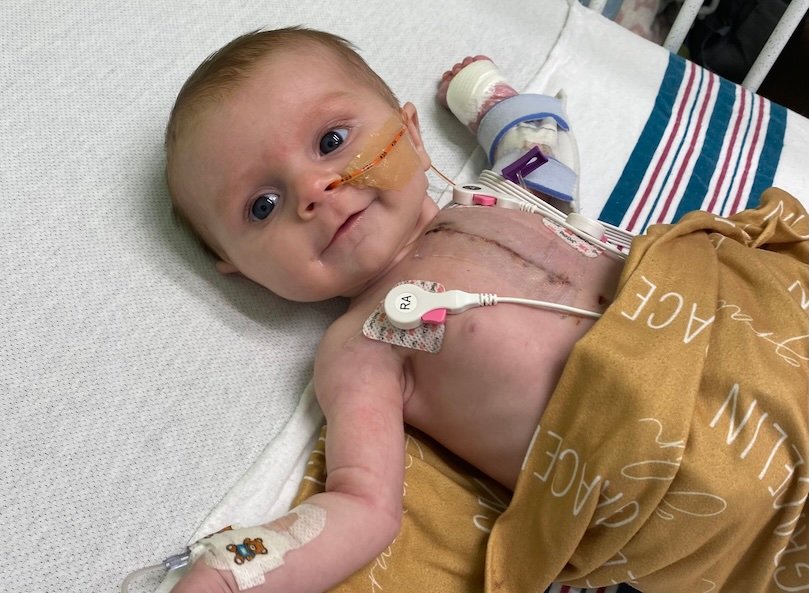
UVA Health Children's is advancing a unified system where any child in Virginia can access high-quality heart surgery and cardiac care close to home. The Virginia Congenital Cardiac Consortium, or VC3, partnership brings together UVA Health Children’s, Children’s Hospital of the King’s Daughters (CHKD), and the Children’s Hospital of Richmond at VCU (CHoR) into the first 3-way pediatric congenital heart consortium. This collaboration aims to ensure that patients no longer need to leave the state to find the specialized treatment they require.
The goal of VC3 is to provide the right care to children in the right place at the right time. This regional approach allows the collective to share resources and expertise, even sharing surgeons to work together on difficult cases. The three hospitals use standardized treatment protocols and shared communication to make the system seamless for children and families. This ensures every patient benefits from consistent, top-quality care. Shared leadership among the hospitals also helps maintain exceptional outcomes while increasing the volume of patients the programs serve together.
We asked James Gangemi, MD, and Michael McCulloch, MD, about VC3 and how it improves outcomes for patients across Virginia. They share insights into the teamwork required for congenital heart surgery and explain how this regional model is setting a new national standard.
How does participation in VC3 distinguish UVA Health Children's as a national leader and what sets this model apart from care that might be offered elsewhere?
Gangemi: The thing that's particularly unique about our collaboration is that, unlike many collaboratives, we have three programs within this collaboration, and surgery and perioperative care is being performed at all three. We firmly believe that this type of regionalization of care, especially in congenital heart disease, is the future. I want our collaboration to be a model throughout the country for how a collaboration can be performed and how it can be effective.
McCulloch: I believe that there are 10 or 11 other programs in the country that are considered collaboratives, but a number of them have programs in different states, which means that not only would families have to travel a much further distance between programs, but you're also typically dealing with different insurance and state Medicaid packages, which adds another layer of difficulty.
Each of our programs is within one to two hours of the others and is in the most densely populated regions of the state. It's these aspects that are particularly unique within the collaborative field, and when combined with outcomes that are on par with, or better, than most programs across the country, we're incredibly proud of what we're able to bring to the state for children with congenital and acquired heart disease.
Can referring providers send patients to the closest hospital, whether that is CHKD, CHoR, or UVA Health Children’s? Or should they still consider which specialists are located at each institution?
Gangemi: Patients are seen locally and triaged to determine which program is the best fit for their particular scenario. If a patient requires surgery or care that can be provided at their local institution, that is always the preference. For more complicated cases, I may travel to either CHKD or CHoR to operate with my partners there. Conversely, for cases such as transplants, ventricular assist devices, or the highest-risk neonates, those patients are transferred to UVA Health Children's for their care. Our first priority is ensuring the patient gets the level of care they need, with the preference for it occurring as close to where the family lives as possible.
For patients specifically, what should they know about this collaborative and how it will impact their care?
McCulloch: I really do think that the concept of the patient getting the right care, at the right place, and at the right time is what we're all about, all while using cutting-edge techniques, without redundancy and unnecessary use of resources. It's about being medically efficient at a time in the patient’s life when traveling around is not the easiest thing to do.
We want to get these kids back to the closest, most convenient place for them to continue to get the long-term care they need. Twenty to thirty years ago, the focus in our field was largely on survival, but that’s not good enough anymore. It's really about giving patients a great outcome, whether that’s with surgery, catheterization-based interventions, or noninvasive medical management, and allowing the patient to live up to their potential.
So, if a child is seen and treated at CHoR for a congenital heart disease, would they still be able to follow up with specialty programs (such as a neurocardio program) here at UVA Health Children's or vice versa?
McCulloch: Yes. It’s impractical to have all of these sub-sub-specialty programs at each hospital. Within the collaborative, we're able to take advantage of the resources available across all three hospitals and ensure our patients have the most complete care possible.
What led to the formation of this collaborative, and how have the involved hospitals benefited?
Gangemi: I had been at UVA Health Children's for about six years, and we were in the process of really building up our program to be a very cohesive group: pediatric cardiology, pediatric cardiac surgery, pediatric critical care, and anesthesia.
I thought, “Well, we've really built up a great program here at UVA Health Children's. Is there a possibility we could expand our program elsewhere?” Around that time, CHKD, in Norfolk, started referring some complex cases to me. Over the course of the year, we built a great working relationship and recognized there was a unique opportunity to extrapolate what we had developed at UVA Health Children's to CHKD, with a focus on caring for patients the same way at both institutions, both inside and outside of the OR. This led to the formal collaboration with CHKD in 2016.
It benefited the patients in that, if it was a complex patient, their surgery would be done at UVA Health Children's, but they would go back to CHKD and see their cardiologist there so they wouldn't have to travel back and forth. Same for any patient with heart failure, because we're the only pediatric heart transplant program in the state.
In 2023, the collaborative had the opportunity to formalize our relationship with the CHoR team as well, ultimately forming the VC3. We firmly believe that no child should ever have to leave the state of Virginia to receive cutting-edge care for their acquired or congenital heart disease.
McCulloch: What people don't realize about congenital heart disease programs is that there are typically one, maybe two in each state. Considering the incredibly high complexity of the surgical and perioperative care associated with this patient population, it is impractical, inefficient, and potentially risky to unnecessarily dilute the expertise and risk the quality of care. At the risk of being redundant, I will reiterate that we truly focus on ensuring these kids get the right care, at the right place, and at the right time.