UVA Health Among First in Virginia For Robotic CABG
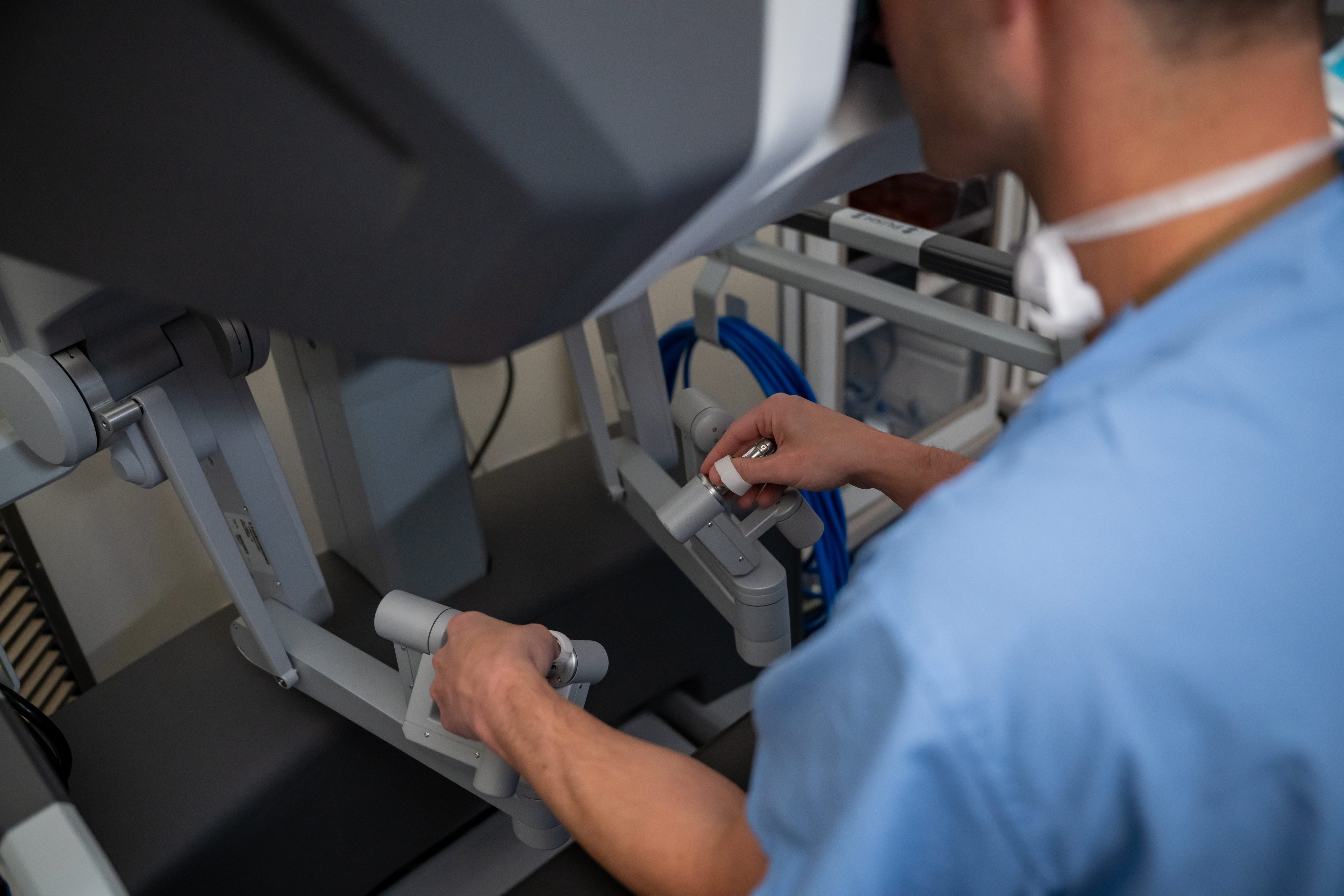
UVA Health has expanded its advanced cardiovascular care to offer robotic bypass surgery for coronary artery bypass grafting (CABG), part of it's robotic cardiac surgery program. This minimally invasive option gives eligible patients across Virginia the survival benefit of a surgical bypass without the pain and recovery time of an open surgery. Led by Kate Verdi, MD, a cardiovascular surgeon at UVA Health, robotic CABG is part of UVA Health's robotic cardiac surgery program that also includes robotic valve procedures.
The procedure, called robotic MIDCAB (short for Minimally Invasive Direct Coronary Artery Bypass), is performed through small incisions on the left side of the chest. Verdi uses the robot to harvest the left internal mammary artery (LIMA ) from the chest wall, then creating a bypass to the left anterior descending artery (LAD). The procedure avoids a sternotomy and the heart-lung machine.
Verdi calls the procedure "a nice in-between" for patients weighing surgery against stents. "They're getting the surgical benefit that we can provide with coronary artery bypass grafting, but they're also getting all of the benefits of a minimally invasive approach," she explains.
How Robotic CABG Works
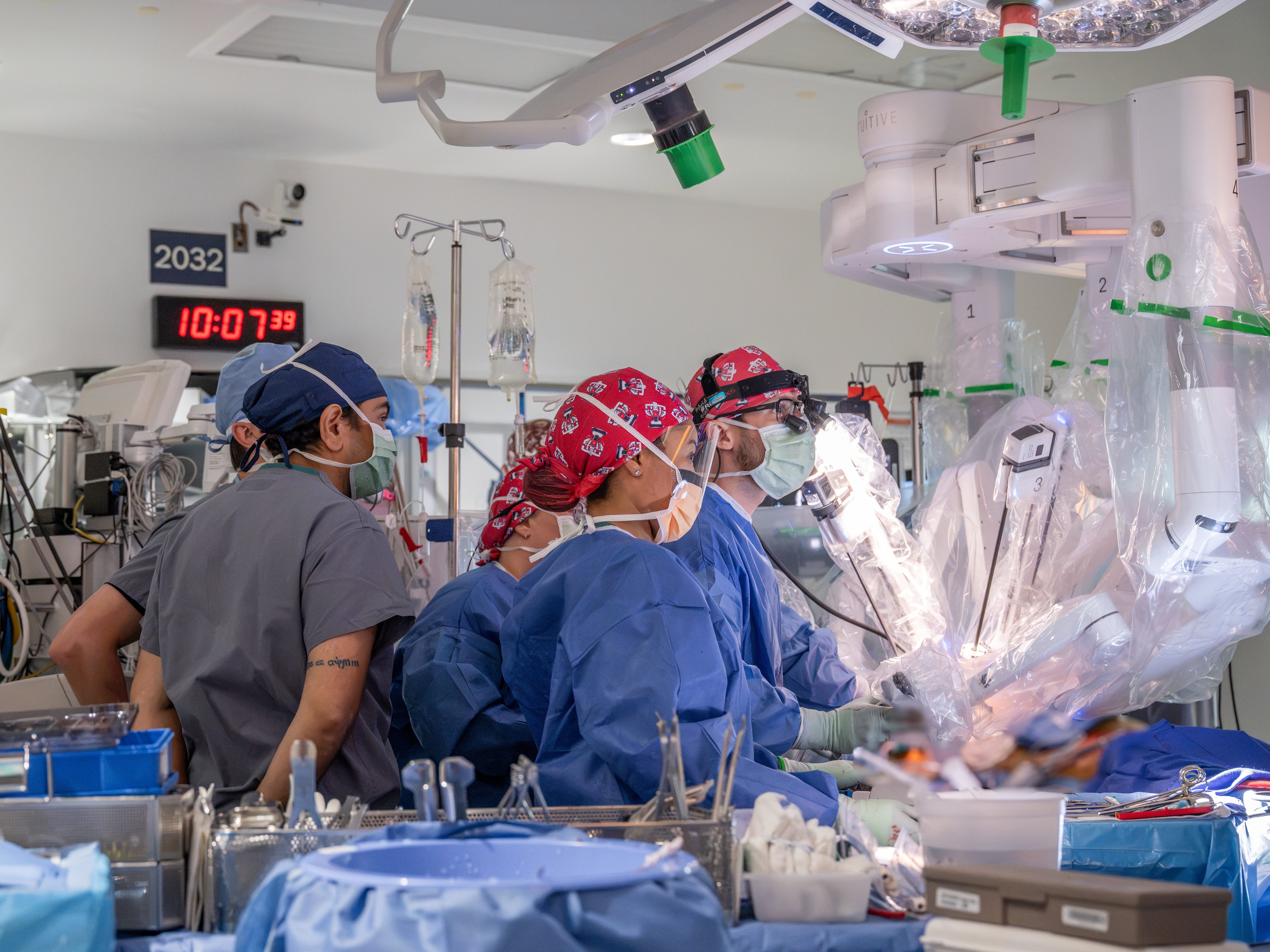
MIDCAB starts with three small incisions on the left side of the chest. Ports (called trocars) go in at the bedside. The anesthesia team breathes for the patient with the right lung only, so the left lung collapses. Gas is then added to the chest, which opens up a large space to work in.
The robot’s arms are attached to the trocars. One arm holds a camera, and two hold instruments. The surgeon sits at a console and controls the instruments by hand. "We have all the movement and dexterity that we would have if it was open surgery and we're using our direct hands, but we're able to do it through these long, skinny instruments to reduce the size of the incisions," explains Verdi. The console also gives a high-resolution, almost three-dimensional view, with screens letting everyone in the room see the same image.
Using the robot, the surgeon frees the LIMA from the chest wall. The artery stays attached to its normal blood supply, and the far end is cut and clipped. "It's an excellent blood supply, and we keep it hooked up to its normal inflow, Says Verdi. “Then, we connect it to the LAD artery on the heart.”
Finally, a slightly larger incision over the left chest gives a direct view of the heart. It is either an extension of the middle port incision or a small fourth incision. With the heart still beating, the surgeon sews the LIMA directly to the LAD. The result is one bypass.
Why the LIMA-to-LAD Bypass Matters
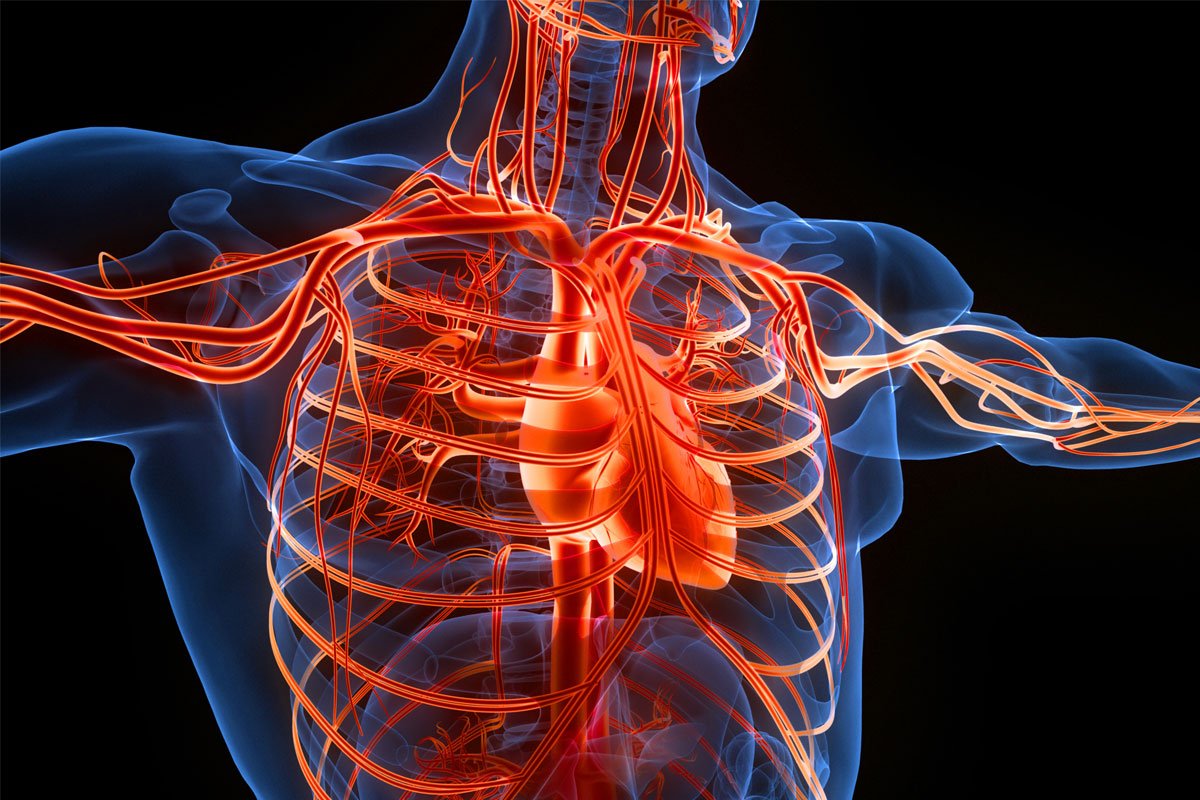
The LAD supplies nearly 60% of the heart's muscle. "The most benefit comes from the LIMA to LAD bypass, surgically. That is where the most survival benefit comes from CABG," says Verdi.
Patient Selection: Two Groups Who May Benefit
Verdi sees robotic MIDCAB as a good fit for two groups of patients:
- Isolated LAD disease: These patients get the survival benefit of surgery without a sternotomy or the heart-lung machine.
- Hybrid approach: These patients have significant LAD disease plus other disease that can be treated with stents. They get a robotic LIMA-to-LAD bypass and PCI for the rest. The PCI is done at a separate time.
Verdi notes that the first group is the ideal match. "A lot of patients are just simply not willing to have a sternotomy and a 5-7 day hospital stay for one vessel, but we know that has huge benefit for those patients," she says. "That is the perfect candidate."
But not every coronary artery disease patient is a fit. Those with severe three-vessel disease are still best served by a sternotomy CABG. Body size can also play a role, so the team assesses every patient.
Faster Recovery, Fewer Restrictions
Avoiding sternotomy with robotic CABG improves the patient experience through:
- Shorter hospital stays: Patients can be home in about three days, compared with five to seven days after a sternotomy.
- Fewer restrictions: Without sternotomy precautions, patients are not limited to lifting less than 10 pounds for a month or six weeks. They return to work and normal activities sooner.
- Lower risk: Without the heart-lung machine, the heart is not stopped and restarted. That lowers the risk of stroke. Minimally invasive surgery also lowers the need for blood transfusion.
- Less pain: Patients have significantly less pain and return to full function more quickly.
Growing the Robotic Cardiac Surgery Program at UVA Health
Robotic MIDCAB joins UVA Health's robotic cardiac valve surgery program as another robotic cardiac surgery offering. Robotic ablation procedures are planned as well. For patients, that means more ways to get the benefits of minimally invasive surgery.
"I really became a believer in robotics from the general surgery side, just seeing the benefits," says Verdi. “Now, I’m happy to be able to provide coronary artery disease patients a robotic option for revascularization.” She wanted to offer Virginia patients an option that was not open to them before.
Research matters to her too. She plans to study robotic outcomes, including through randomized trials "to push our field forward," and to train the next generation of surgeons so more patients around the country can get this care.