A Police Officer Gave a Piece of Himself, Twice: Tommy's Transplant Story
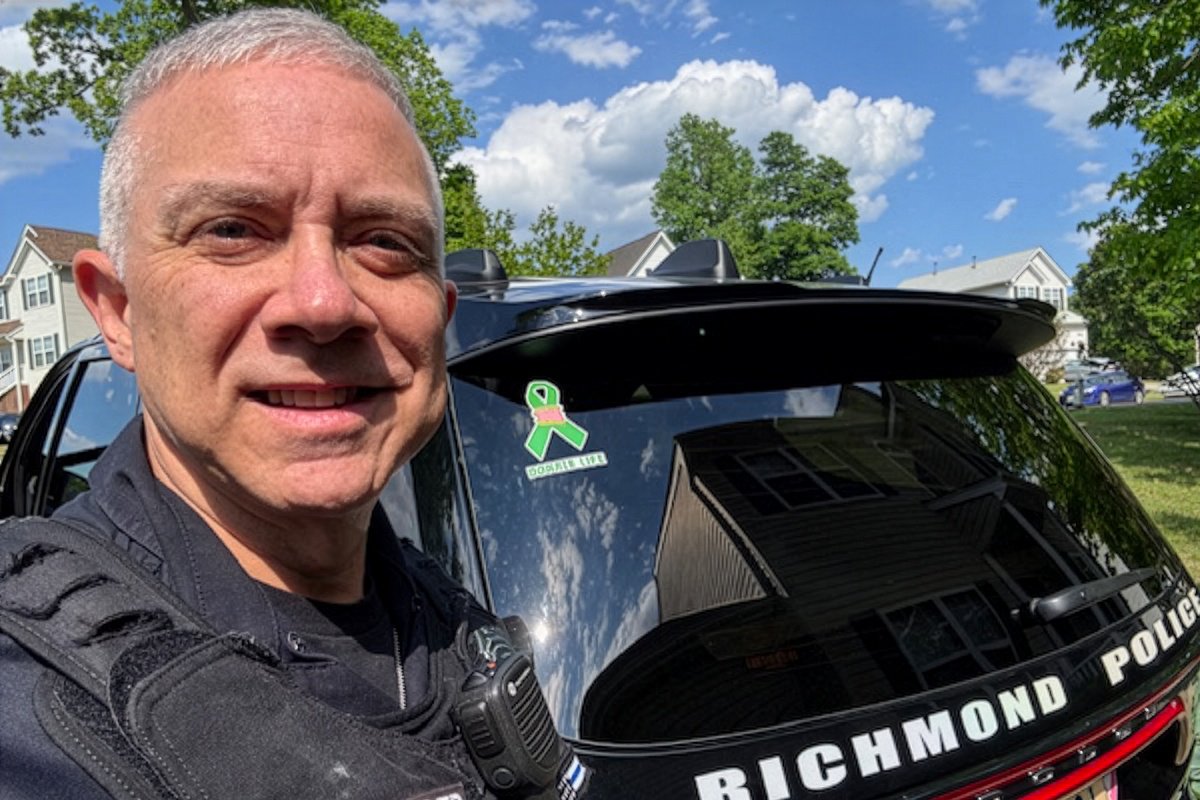
Tommy Obenrader has spent nearly 28 years serving the people of Richmond, Virginia as a police officer. But a few years ago, he found a new way to serve, one that would change two lives forever. He became a living organ donor: not once, but twice.
His journey started with a news story, grew into something far bigger than he expected, and led him all the way to UVA Health, the only hospital in Virginia that could make his second donation possible.
A News Story Starts Tommy's Journey
It was a quiet night at home. Tommy and his wife were watching the local news when a story caught his eye. A Richmond firefighter needed a kidney transplant. Tommy didn't know the person, but he felt a pull he couldn't ignore.
“I looked at my wife and I’m like, you know what? I think I’m going to look into that,” he says. Tommy reached out right away to VCU Health to see if he was a match as a living organ donor.
He and the firefighter turned out to be different blood types, so they weren’t a match. He thought that was the end of the road. But then a coordinator told him about non-directed donation, which he had never heard of before.
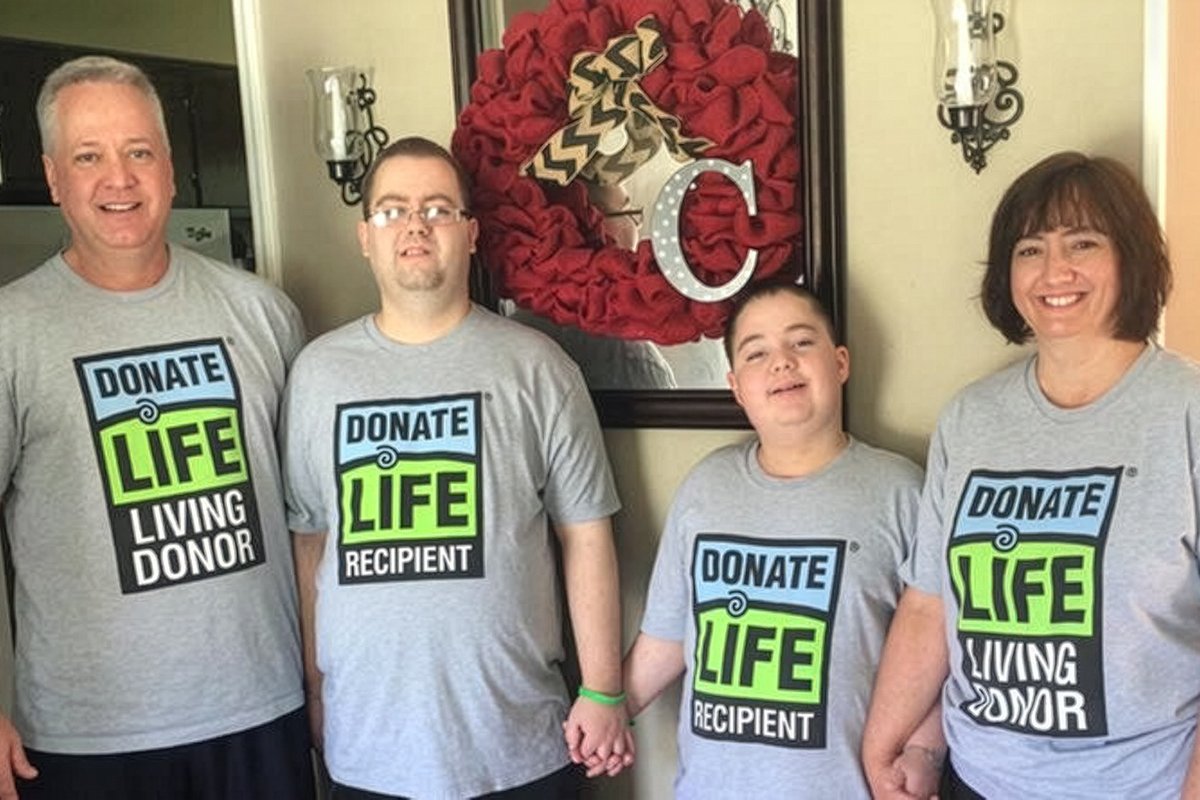
A non-directed donor is someone who gives an organ to someone they have never met and may never meet. You don’t pick who receives your organ. You simply give.
“It just feels right to do it, you know, if you're able to,” Tommy says.
He went through testing and in November 2021, Tommy donated one of his kidneys. The surgery went smoothly. He recalls barely being on pain medicine for a day before he left the hospital.
“The kidney went unbelievably well,” he says. “The recovery was great.”
What Is a Living Donor?
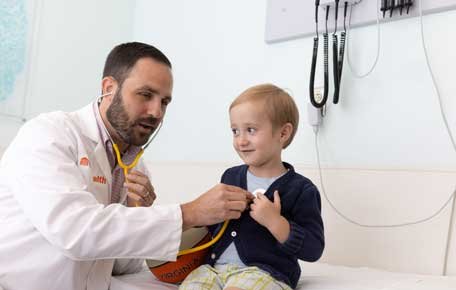
A living donor is a healthy person who gives an organ or part of an organ to someone who needs a transplant. You don’t have to be related to the person you help. Living donors can give a kidney (you have two, and can live with just one) and a portion of the liver (it grows back on its own).
One Organ Wasn’t Enough
After his kidney donation, Tommy wanted to stay connected to the donor community. He joined social media groups for living donors. He spoke on panels about his experience, talking to people who were thinking about donating.
One day, he learned he could become a double donor. That’s someone who donates one organ and then donates part of another.
“I saw just how few people had been double donors,” he says. “So I reached back out to VCU.’”
VCU tested him and found that the shape and size of his liver was a better fit to donate to a child than an adult. Since they only treat adult patients at VCU Health, he was told to look for a pediatric transplant center if he would like to continue as a donor.
Because UVA Health has the only pediatric liver transplant program in Virginia, “It was kind of a no-brainer,” says Tommy. He made a phone call to UVA Health and filled out a form online.
Finding the Right Fit at UVA Health
Tommy first met his surgeon, J. Francisco Guerra, MD, after more testing at UVA Health.
Their first meeting was a video call. Tommy was sitting in his sim racing room (simulated racing is a hobby he shares with his sons, where they race virtual Formula 1 cars on a full racing seat setup). Racing helmets hung on the wall behind him.
“He saw the helmets behind me and he’s like, ‘Wait, what are those?’” Tommy laughs. “We probably talked Formula 1 for 20 minutes.”
Guerra was honest with Tommy from the start. He told him that his job was to find a reason NOT to approve the donation (because donor safety always comes first, and it’s safer not to undergo surgery). After reviewing all the tests, the answer was clear.
“He said, ‘After looking at all your labs and all the medical tests, everything looks great,’” Tommy recalls. “At the end of that conversation he goes, ‘Well, I already have a patient in mind for you.’ I just kind of sat there dumbfounded. There may have been some tears.”
Within days, a scheduler called to set a date. The surgery was booked for January.
"Sequential living donors (donating a kidney first and liver later or vice versa) are very unique (there are very few) and challenging from a technical and an emotional point of view," says Guerra. "We’ve done a good number of these type of donors here at UVA Health, and it’s a challenge for everyone. Donor safety is the paramount priority and nothing can go wrong," he notes.
Surgery Day For a Police Officer & Little Girl
Tommy and his wife arrived in Charlottesville the night before surgery. UVA Health assisted with lodging so his wife wouldn’t have to drive back and forth each day.
“They looked out for not just me, but all of us,” he says.
He didn’t sleep much the night before. But when he got to the hospital, everything felt calm and organized. At every step of the prep process, the team checked in with him. They reminded him that he could back out at any point, right up until the moment he went under anesthesia.
“I don’t know how anybody could back out at this point,” he says with a smile.
The surgery involved removing about 18% of Tommy’s liver. Unlike a kidney, the liver grows back. His care team expected a full regrowth within about three months. Because the recipient was small, they only needed a small piece, which meant his liver would likely heal even faster.
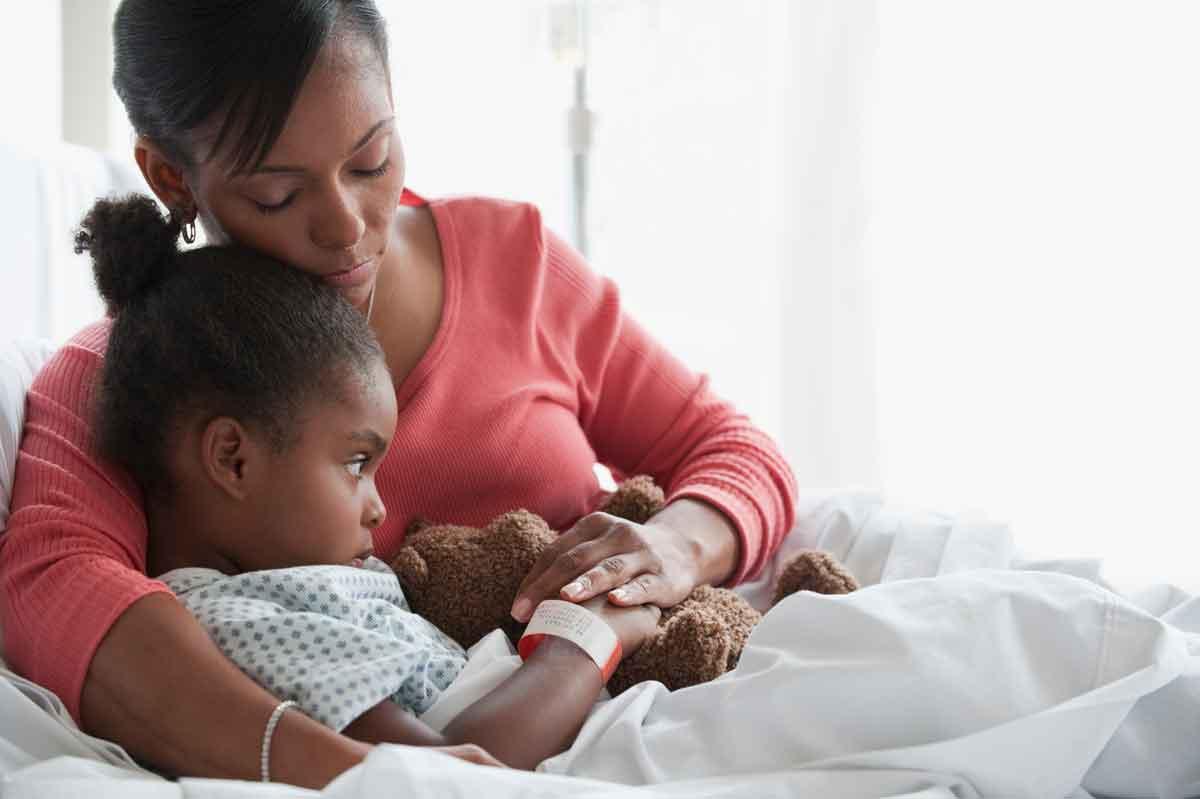
All he knew about the child on the other side of his transplant donation was that she was a little girl. And in the days after surgery, while he was still in the hospital, that weighed on him.
Donating to a child made it feel different. “I know it shouldn’t make a difference, but donating to a kid just felt right,” he says. “Some day, I’d like to meet the little one.”
It also felt more personal. “I woke up in the middle of the night, and I had a nightmare that she died,” he says. “I was panicking. The nurses immediately reached out and said, ‘No, she’s fine, everything’s OK.’”
A Harder Recovery, But No Regrets
The liver donation was tougher on Tommy than the kidney. He had told himself it would be easy. Guerra had warned him otherwise.
With a kidney donation, surgeons remove the whole organ. With a liver donation, they take only a portion, and then the liver has to regrow and heal. That takes time, and it can be painful.
After he went home, Tommy also dealt with a complication. A small pocket of fluid formed behind some scar tissue and became infected. It was hidden where blood tests couldn’t easily detect it. A CT scan (a detailed type of body imaging) finally revealed the problem. Once he was on the right medication, the pain was gone within two days.
Throughout his recovery, the team at UVA Health stayed close. His care coordinators were in contact with him every single day.
“I’ve been in that office. It’s not like there’s ever a slow day,” he says. “But the response and the care — I never felt like a patient. I never felt like a number.”
He even laughs about the nurse who made him a protein shake with ice cream once he was finally allowed to eat.
“I told her, ‘This is the greatest thing I’ve ever eaten in my life.’"
"Long term outcomes have to be followed very closely, especially in a patient Like Tommy, who is missing one kidney and a portion of their liver," says Guerra. "I'm really proud to be part of one of the very few centers doing this in the nation."
Back on His Feet, & Still Giving Back
Today, Tommy is back to full duty at work and slowly returning to weight training. His liver has already grown back well. His next follow-up appointment at UVA Health is coming up soon.
“I feel great,” he says.
He still keeps in touch with the man who received his kidney. Every year on the anniversary of the surgery, Tommy sends him a message. The man always responds.
And Tommy hasn’t stopped talking about organ donation. He changes his social media profiles every April for Donate Life Month. He answers questions from strangers online. He encourages anyone thinking about donation to at least look into it and to reach out to UVA Health.
“If somebody just wants to donate a kidney, I say, ‘Hey, reach out to UVA Health,’” he says. “UVA Health is where I would recommend anyone now for either procedure.”
He thinks everything worked out for a reason: the TV story, the wrong blood type, the social media group, the liver that happened to be just the right size for a child. He wouldn’t change any of it.
“I just kept looking at the number of how few people have done this,” he says. “And I thought 'Well, I can be one of them.'”