A Family’s Gift of Life: the Childers’ Matching Kidney Transplants
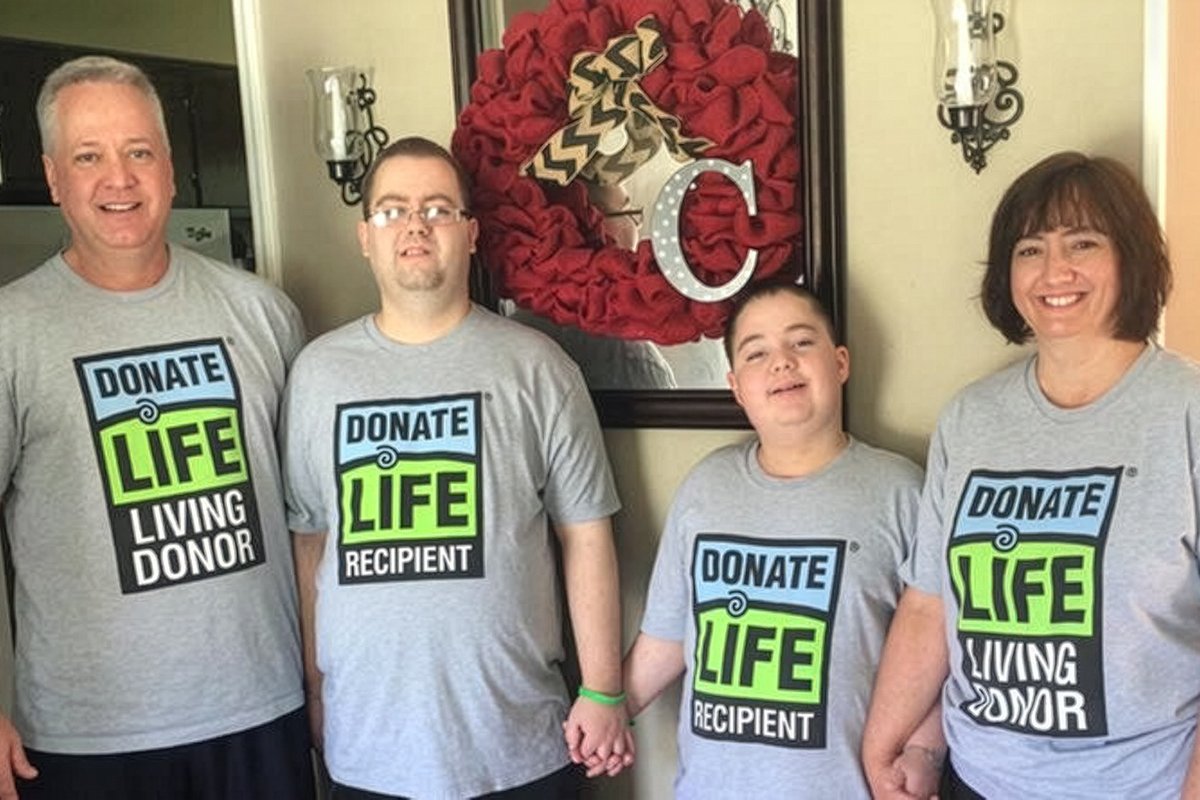
For Mark Childers and his wife, Mary Beth, family has always come first. They’ve spent over 20 years managing a complex medical journey for their two sons, Andrew and Jordan.
Through it all, they've found strength in their faith and the expert care at UVA Health.
A Concerning Diagnosis
Both Andrew and Jordan were born with a rare genetic condition called Bardet-Biedl syndrome. It can cause many different health issues. For the brothers, it eventually led to kidney failure.
When it became clear that both boys would need transplants to survive, Mark and Mary Beth didn't hesitate. They decided right away that they would be the ones to provide lifesaving organs needed for their children if needed.
"We didn't look beyond ourselves," Mark explains. "It’s your child. You're going to do anything you can to help."
Jordan’s Journey: A Mother’s Love
The family’s experience with kidney transplant began with their younger son, Jordan. When Jordan was only three years old, he became dangerously ill with liver problems caused by autoimmune hepatitis. He spent 47 days in the hospital. While the doctors worked hard to save his life, the medicines he needed were very hard on his kidneys.
"He developed hepatitis at three, but through the treatments, a bunch of the things they gave him really escalated his kidney problems," Mark says. By the time Jordan was five, his kidneys were failing, and he needed a transplant.
Mary Beth was a perfect match for her son. However, the surgery had a small complication. Testing showed that Mary Beth had two arteries leading to her kidney instead of the usual one. Some surgeons were nervous about the procedure, but Kenneth Brayman, MD, at UVA Health, knew he could help. He told them it would be "no problem,” according to Mark.
Mom & Son Surgeries
On the day of the surgeries in 2005, Mark waited anxiously while his wife and son were both in the operating room. "I was really scared to death that day," he recalls. The hospital staff kept him updated every step of the way, which gave him peace.
The transplant was a success. Just one day after surgery, Jordan was back to playing with a toy Matchbox truck in his hospital bed.
Andrew’s Journey: A Father’s Turn
While Jordan received his transplant as a child, it wasn't until Andrew was in his late 20s that his kidneys began to decline. Because his parents wanted to avoid him ever needing dialysis, they began planning for a second family transplant.
Since Mary Beth had already donated a kidney to Jordan, Mark was ready to step up for Andrew. In 2016, the family returned to UVA Health. They were amazed to find that Dr. Brayman, the same surgeon who helped Jordan 11 years earlier, would also be performing Andrew’s transplant. "It was just like a homecoming," Mark says.
Mark admits he felt some nerves about going under anesthesia because he wouldn't be able to check on his son during the surgery. "You could wake up to anything and find out. And I was worried about that," he says. But when he finally woke up, the first thing he did was ask for Andrew. The nurses moved their beds close together so Mark could hold his son's hand.
The recovery was a success. Andrew’s new kidney started working perfectly right away.
A Lifetime of Gratitude
Today, the family is doing well. They still make the three-hour drive to UVA Health for checkups. They credit the medical team, especially their coordinator, for making them feel like family.
The family celebrates "kidney anniversaries" every year with cake and ice cream to mark the dates of the transplants. For them, these dates are just as important as birthdays.
Living Donation Saves Lives: Become a Donor
Mark and Mary Beth now share their story to encourage others to consider organ donation. Mark says, "I’d do it again if I had another one. It’s such a shame, you know, the amount of organs that are buried every day... burying those organs doesn't do a bit of good for anybody. I would say do it."
Consider registering to become a living organ donor today by signing up on Donate Life Virginia's registry or by contacting UVA Health through our living donation forms. You could save a life.