Redefining Care for Congenital Abnormalities of the Kidney and Urinary Tract: Innovation, Ethics, and Excellence in Pediatric Urology
Congenital abnormalities of the kidney and urinary tract (CAKUT) span an enormous clinical spectrum. Mild anatomic variants resolve spontaneously and only require diligent monitoring and follow-up care, but life-threatening anomalies create ethical considerations surrounding when to intervene and long-term outcomes, both of which seem overly lofty to a family thrown into a situation they’re unprepared for. Caring for these children requires surgical expertise, longitudinal vision, ethical clarity, and an ability to navigate uncertainty alongside families at moments of extraordinary vulnerability.
Vijaya Vemulakonda, MD, JD, UVA Health Children’s new chief of pediatric urology, believes a thoughtful approach is needed to navigate such tumultuous waters. Having a multicenter data registry to substantiate recommendations with evidence, a way to forge trust with parents early through prenatal care, and a strong multidisciplinary team that can treat the whole child are some of the pieces providers need to find for the CAKUT puzzle. “Treating the whole patient improves the quality of care long-term. As specialists, we see a small piece of the puzzle—multidisciplinary care keeps us from losing sight of the whole child," she says.
Defining Surgical Parameters
CAKUT conditions are among the most frequently identified anomalies on prenatal ultrasound. But instances of CAKUT that require intervention are, on the whole, rare. It’s only by combining and pooling data that children’s hospitals can find better answers for families. “We developed a multi-center prospective data registry to look at practice variation and see if collaborative efforts could help develop better guidelines and better data to guide surgical decision-making. If you go to one hospital, your likelihood of surgery is 50%, and at another it’s 15%. Those differences aren’t explained by the clinical presentation of the kids,” she explains.
These treatment decisions have often relied on individual training, institutional culture, or anecdotal experience rather than robust, long-term evidence. Generating guidelines that optimize surgical outcomes is one of the ways clinicians use data to establish evidence-based medicine.
This collaborative registry allows clinicians and researchers to examine practice variation, surgical decision-making, and long-term renal outcomes rather than short-term procedural success alone. Early findings have revealed striking regional differences in rates of surgical intervention that cannot be explained by clinical presentation, underscoring the urgent need for standardized, evidence-based guidelines.
Importantly, the consortium shifts the focus away from surgery as an endpoint. Instead, it asks the questions that matter most to patients and families: Does intervention preserve kidney function? Does it reduce the risk of chronic kidney disease or future transplantation? How do these children fare years—not months—after diagnosis?
Caring for the Maternal-Fetal Dyad in CAKUT
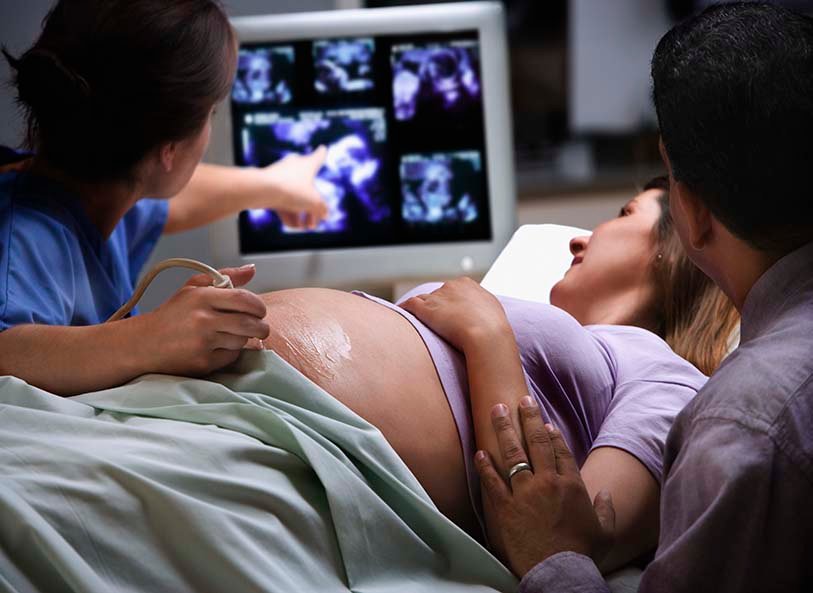
Because most CAKUT are identified on prenatal ultrasound, that’s also when care begins. Maternal-Fetal Medicine specialist Lisa Zuckerwise, MD, initiates these conversations with families. “Anytime we are disclosing an unexpected finding on prenatal ultrasound, we are tasked with the challenge of both accurately describing the anomaly as well as providing comprehensive and compassionate support, accurate information, and a plan forward for the pregnancy that has taken a turn into what feels like uncertain territory.”
Vemulakonda has always felt called to the maternal-fetal dyad and considers these conversations to be some of the most crucial.
Detailed sonographic evaluation of the affected and related structures informs care, postnatal treatment plans, and helps to determine whether or not fetal intervention is warranted.
The Complex Problem of Fetal Intervention
As complex as fetal surgical interventions are from a technical perspective, the morality and ethical considerations are equally pressing. There are questions of personhood, autonomy, and outcomes. Clinicians walk the line of setting realistic expectations while leaving space for parents to have hope. How can clinicians meaningfully counsel families when access to data is limited, and how can they ensure equitable access to novel therapies that are often available only at large tertiary centers?
Conditions that impair fetal urine production can lead to critically low amniotic fluid levels, jeopardizing lung development and survival after birth. Until recently, many of these diagnoses were considered uniformly fatal. Novel fetal interventions have helped to change that.
Zuckerwise shares, “The goal with shunting is to restore amniotic fluid, but to be a candidate, we need to confirm there is preserved fetal kidney function.” For fetuses with lower urinary tract obstruction (LUTO) but no other kidney or urinary tract abnormalities, this procedure is life-saving, providing the amniotic fluid needed to save lung function.
But what about when there is a high risk of prenatal renal failure? With many children waiting for donor kidneys that will never come, is it ethical to continue expanding that list? Unfortunately, these aren’t questions with easy answers.
Addressing Disparities Through Mixed-Methods Research
Without clear surgical guidelines, some of the aspects that creep into clinical decision-making are markedly non-clinical. Through interviewing parents of children diagnosed with CAKUT, Vemulakonda has explored how anxiety, communication gaps, and assumptions about health literacy shape care decisions.
Language barriers, perceived adherence risk, housing instability, or assumptions about follow-up can influence decisions in ways that disproportionately affect already vulnerable populations. Through the development of decision aids and educational tools, families become empowered to participate meaningfully in care decisions. These tools are designed to clarify that a decision is being made, outline options and tradeoffs, and help families articulate what matters most to them.
This work positions shared decision-making not as an idealized concept, but as a practical solution to inequity in a high-pressure clinical environment.
Multidisciplinary Care Across the Lifespan
Children with congenital kidney and urinary tract anomalies rarely experience isolated disease. Renal dysfunction intersects with bladder development, growth, neurodevelopment, nutrition, and mental health. Multidisciplinary care models that bring together pediatric urology, nephrology, transplant surgery, psychology, nutrition, and social support are needed.
This approach reduces fragmentation, improves communication, and ensures that families are supported not just at moments of crisis, but throughout the long arc of care. We provide this through a coordinated system that supports prenatal diagnosis, postnatal management, and future innovation in fetal therapy.
A Model for the Future of Pediatric Subspecialty Care
Rigorous research, ethical clarity, clinical excellence, and deep respect for families as partners in care are the necessary ingredients for a successful CAKUT program. There are important considerations around what's possible, but also examining the long-term impacts and ensuring equal access to care.
By building better data systems, meaningful relationships between specialties, and clear decision-making guidelines, fetal pediatric urology is moving towards a more just and evidence-based future that centers on compassion.
For children born with congenital malformations of the kidney and urinary tract, and their families, this care will change lives.