For Pediatric Spasticity, Multidisciplinary Approach Leads to Better Outcomes
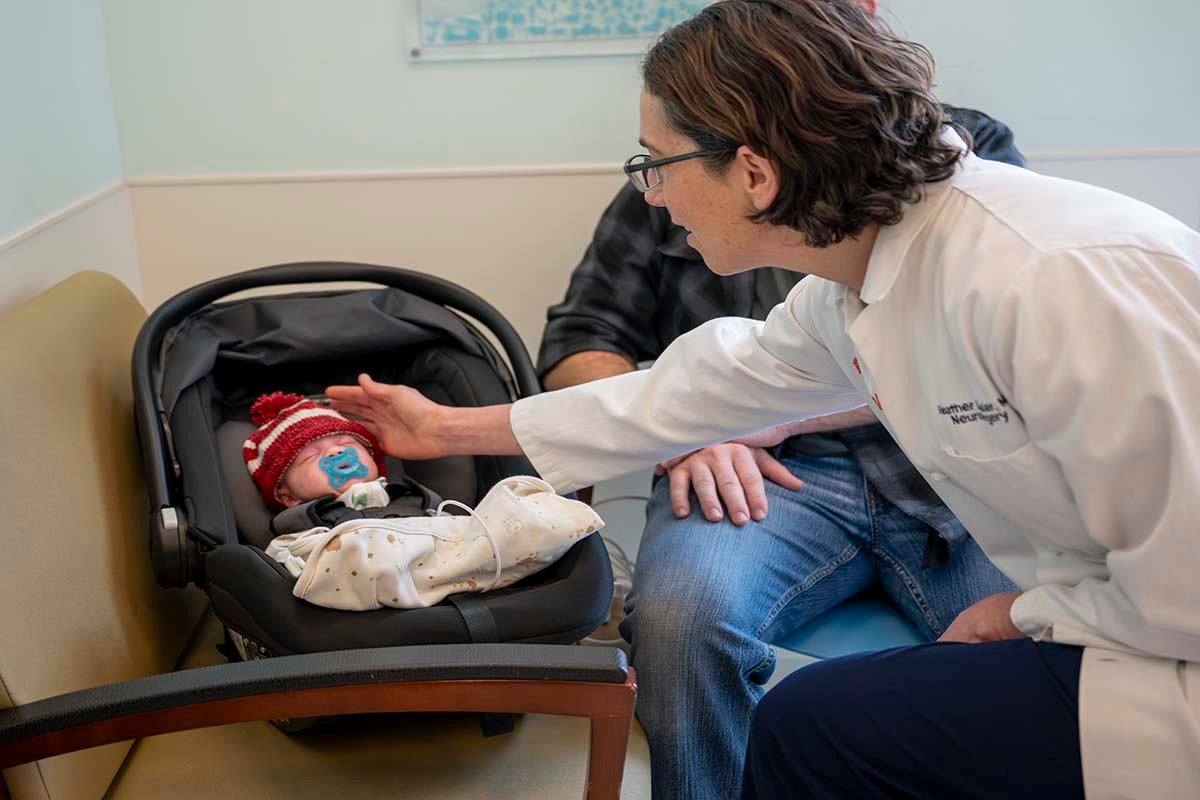
Spasticity can affect a child’s entire body, creating profound impacts on movement, development, and quality of life. UVA Health Children’s commitment to opening a pediatric spasticity program required getting a team of specialists with the right experience.
Finding the right treatment option for each patient requires a truly multidisciplinary approach with real-time collaboration and family participation. Treatment options for spasticity include physical therapy, Botox injections, baclofen pumps, tendon releases, and selective dorsal rhizotomy (SDR). For all of these options, the team has to consider rehabilitation, follow-up, and helping each family reach their treatment goals.
Heather Spader, MD, a pediatric neurosurgeon, speaks highly of this multidisciplinary approach. “Everybody is able to give an opinion on what we think is the best strategy.”
Selective Dorsal Rhizotomy
In the more than 30 years that selective dorsal rhizotomy (SDR) has been available to treat spasticity in the United States, thousands of patients have had the procedure performed. Through that time, there have been numerous improvements to technique.
Given the positive experience many of the patients share, it’s surprising that there aren’t more pediatric programs offering this procedure. Spader explains that having the necessary training on the current techniques is a crucial component of being able to offer this procedure. Spader says, “It was controversial in the beginning because it was a long incision with a lot of bone removal. And there was a question about the long-term impacts. There was a transition to just a single-level laminectomy about 15 years ago. That made the long-term risk profile go down significantly.”
For Spader, a methodical approach to this procedure is best. “I do see differences in the reactions of the nerve roots. There’s some that don’t react at all. So why cut those?” By focusing on the most reactive nerve rootlets and the muscle groups that are specifically bothering patients, she can individualize treatment.
Having an experienced OR team is part of the puzzle, and one UVA Health Children’s has in place. The next part of the puzzle is just as important though.
Committing to Recovery
The other component that needs to be in place before this procedure can be offered is the means for recovery. For this procedure in particular, surgery is only the first step in a long journey. Before the surgery, the team makes sure that the family is aware of, and prepared for, the road to recovery. Collaboratively planning with outpatient therapy, the surgeons, and the family in advance is the best way to offer a good outcome.
For most families, that means 3-hour therapy sessions 5 days a week. In those sessions, multiple therapeutic disciplines might be covered. Speech, occupational, physical, and even recreational may be included in each session. “The key to physical medicine and rehabilitation as a whole is definitely a team approach, and we work closely with the therapy team,” says William Ide, MD, a pediatric physical medicine and rehabilitation specialist.
In addition to being incredibly time intensive, it also involves sacrificing what patients may see as their current ability level.
Spasticity, for all of the problems that it causes, also serves a purpose. It allows these patients to ambulate on their own. At a base level, providers are asking children and their families to surrender “okay” for the promise of “better.” But actually taking the leap requires trust, built through appointments where patients’ goals are central in conversations, and where families' concerns are heard.
“After the procedure, their [muscle] tone pattern changes,” notes Ide. “So, they kind of have to relearn how to walk with their tone being what it is after the surgery.”
Having a plan for how these kids will get back on their feet helps to build that trust. But the therapy process isn’t as all-consuming as it once was. At one point, SDR therapy meant a long stay in inpatient rehab. Especially with younger patients, being able to stay in their home and participate in therapy is much more feasible.
One Piece of a Bigger Puzzle
The team feels extremely positively about SDR. And that positivity is due to the patient-reported quality of life outcomes.
“I have to say, of all the patients that I operate on, the SDR patients are some of the happiest patients and the most grateful,” Spader says. Ide agrees. “I’ve seen very few complications with SDRs.”
That doesn’t mean that it’s the only option needed for each individual child. While SDR is extremely effective for lower extremity spasticity, many children still will have upper extremity spasticity as well. And if they’ve been struggling with spasticity for a while, there may be additional orthopedic issues that need to be addressed.
With the multidisciplinary approach, additional orthopedic procedures and interventions can be discussed as part of a whole solution that meets patients where they are and helps them meet their self-set goals.