Counterfeit Car Seats: How Do You Know?
Online shops make it easy for expecting parents to make a baby registry and get everything they need, including car seats. Often at enticing price points. But, much like other designer products at prices that seem too good to be true, sometimes the product is a fake. Counterfeit car seats are popping up more frequently, and for families the consequences for using them can be devastating.
Car seats are one of the most expensive items on every baby registry. Which creates a big incentive for online scam artists to make and sell fakes. UVA Health nurses and certified car seat technicians Teresa Baltuano-Post and Lee Ann Brown say they’ve been seeing more of these fake seats.
So, how do you know if your car seat is a knock-off? And what can you look for to make sure you’re getting a safe car seat?
Knock-Off Designer Car Seats
Desirable car seat brands like Doona can sell for over $500. When people spot one for a low price, they tend to hit buy quickly. Before checking the details that might clue them in that they’re buying a fake.
Some of the things to look for are product descriptions that are littered with grammatical errors, sellers with names that are a long sequence of letters and numbers, and prices that are too good to be true.
Some of the fakes look very convincing, while others are pretty clearly knockoffs.
What you can’t tell until it’s too late are how the knockoff will do in a crash. CNN purchased a fake Doona and conducted a crash test, with stomach churning results. In a car accident at 30 miles per hour, the seat basically disintegrated. Not only did it not provide any protection from the force of the crash, it exploded into plastic shrapnel, adding to the crash’s danger.
“One of the first things we notice upon looking at these car seats is the lack of structure. Approved car seats have steel along the base, along the seat area, and along the length of the torso,” Brown says. This lack of steel enforcement also tends to make the fakes lighter than the real deal.
Where are Knock-Offs Coming From?
One of the things that’s so frustrating is that these car seats aren’t coming from one place people could be warned about. They’re coming from everywhere. And many trusted websites allow third-party listings. While these sellers will be removed once an incident of forgery is reported, they often pop right back up with a different name.
Some sites seem like an obvious source of fake car seats. A random TikTok storefront with no history? Maybe don’t buy safety equipment there. But as parents have reported, these car seats have come from Target’s online site, eBay, Amazon, and Walmart. And it’s not always obvious that it’s a third-party unaffiliated with the brand.
What Do I Check For?
So, how do you know if your car seat is the real, safety-tested, article or a fake? There are a few things to look for.
A real car-seat will always have a federal compliance label. This tells you:
- Manufactured date
- Model name
- Manufacturer’s name, address, telephone number
- Minimum and maximum weight and height requirements
- Where manufactured
- Recall information
- Registration Instructions
But you don’t have to pin all your hopes on one sticker. You can also check for some of these common red flags.
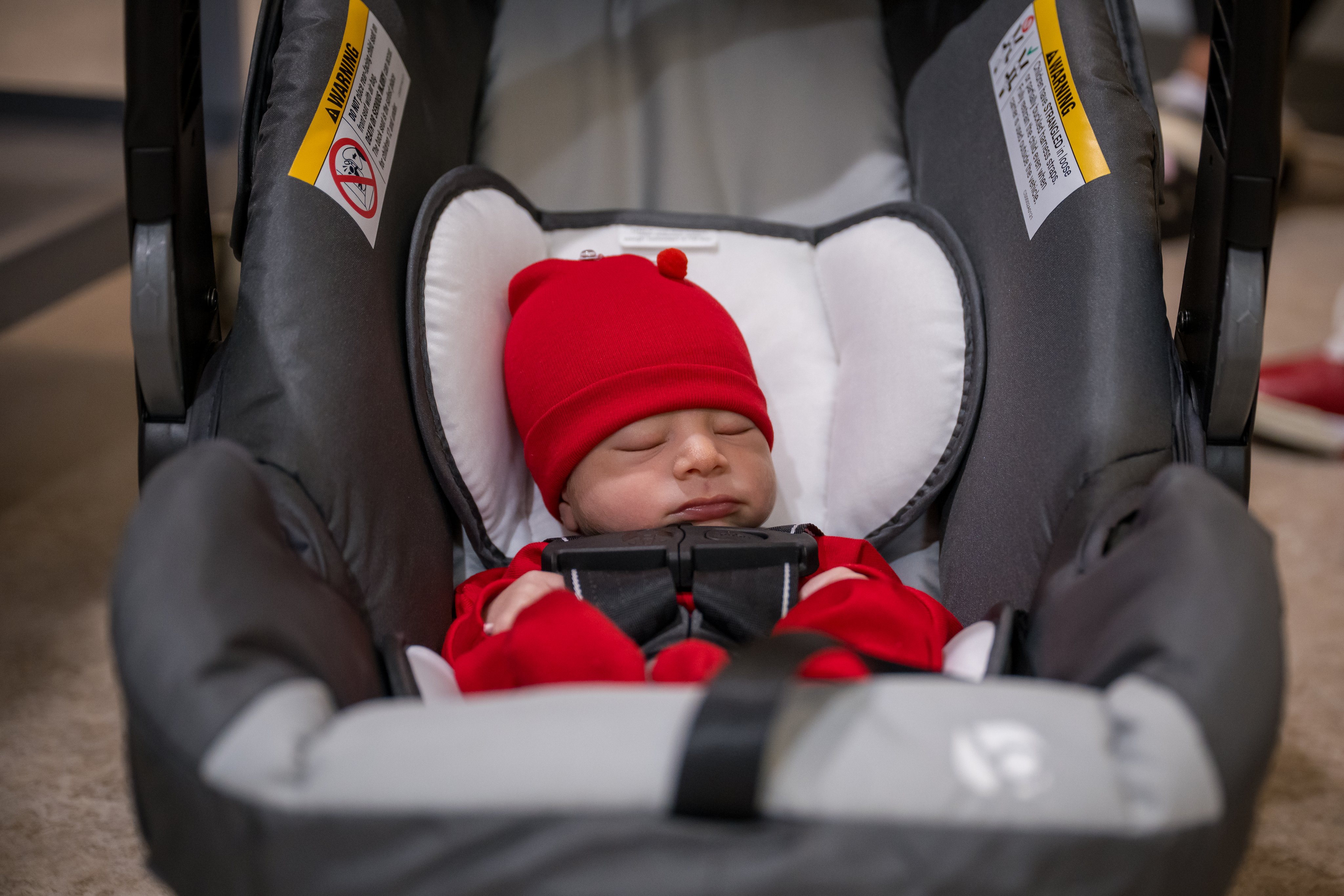
Chest clip
All American car seats have a chest clip, and are required to. This is one fairly easy way to check. The chest clip is actually not one of the 5-points needed for a safety harness but does ensure that the shoulder straps are in the right position.
Professional language on all labels, warning, and written instructions
Manufacturers hire editors and make sure their image is professional, especially the details. Typos in the online listing are a big red flag.
Lack of car seat manual
A lack of car seat manual could mean that the car seat is a fake, or that it was used, in which case there’s no real way to make sure it’s still safe.
Unusually light feel
The major cost of a car seat is in the steel frame and reinforced parts that make it safe in a crash. These are the parts that are usually left out since they can’t be seen. These makes fake car seats much lighter.
Metal or plastic pieces that feel unfinished
Most professional manufacturers have folks in charge of quality assurance. As a result, plastic with a raw edge is unlikely to make it out the door. This is not true for fake car seats.
What Should I Do If I Can’t Tell?
Being a parent is a lesson in managed anxiety. Some things, like car seats, really are worth worrying about. While you hope you never need them, it needs to work perfectly if an accident does happen.
Fortunately, that’s why most places with labor and delivery units also have certified car seat technicians like Brown and Balutano-Post. Car seat technicians can help you find out if your car seat is a fake or safe.
Can’t Afford a Car Seat?
Car seats range from $50 to well over $500 dollars. One thing it’s important to know is that while the extra features on the higher end models are nice, all car seats are required to pass the exact same safety tests.
Having a cheaper model car seat does not mean your baby is any less safe. It’s also not one of the things babies are known to care about.
If you can’t afford a car seat, there are multiple programs across the state designed to help you. Here are some of the places you may look into:
- Medicaid plans
- Virginia Department of Health
- Local nonprofits
Avoid Used Car Seats
While buying used is an amazing way to save money on most baby items (outfits, shoes, toys, and even strollers are amazing second-hand), it’s not advised for car seats.
Car seats are single-impact items. If they’re involved in a car crash, they may look safe but no longer offer protection. Washing them incorrectly can also cause padding to compress, reducing how helpful they’ll be in a collision.
Article Topics