ECMO as a Bridge to a New Heart – Vincent’s Story
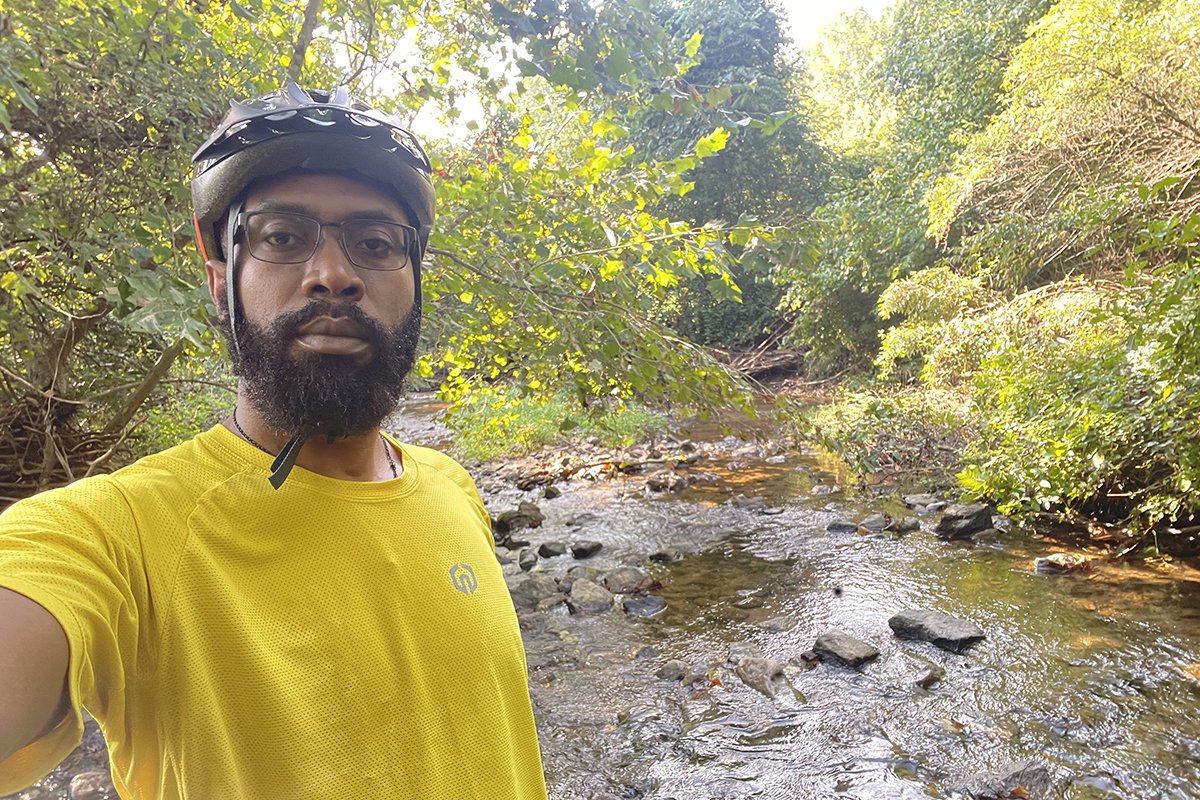
Vincent Zame is no stranger to the cardiologist’s office. “In 2015, I was diagnosed with cardiomegaly (enlarged heart) and hypertension (high blood pressure), and then it progressively got worse," he explains.
Over time, his heart issues got worse. By 2024, his situation had become serious. Vincent was having "blackouts" caused by a type of irregular heartbeat (arrhythmia) called ventricular tachycardia. The arrhythmia was happening so often that the condition is known as a V-tach storm or VT storm.
“The doctors made me understand that given the frequency of the V-tach that I was having, they were considering a heart transplant,” he recalls. While waiting for his new heart, Vincent needed extra support. That’s where a special tool called extracorporeal membrane oxygenation (ECMO) comes in.
“What that means is, we use a machine to pump the blood through the body to support the heart and the lungs,” explains Jared Beller, MD, a heart surgeon at UVA Health. “We reserve using ECMO usually when it's the last resort that patients have. So, only for the sickest patients that we have in the hospital.”
Here, Vincent discusses his ECMO experience. "If anybody would have to go through ECMO at UVA Health, I would say rest assured. You do not have to be afraid of anything," Vincent remarks. "Just take it one day at a time."
What is ECMO?
ECMO is a type of life-support machine. It’s a powerful "helper" that does the work of your heart and lungs so they can rest.
You might need ECMO if you have a condition that causes your:
- Lungs to have trouble putting enough oxygen into your blood
- Lungs to have trouble removing enough carbon dioxide from your blood
- Heart to have trouble pumping enough blood around your body
Doctors often call ECMO a "bridge." It isn't a cure for a disease, but it buys doctors time to treat the main problem. “If there's a short-term injury to the heart or lungs that we expect to recover, we can use it for that purpose. But if it's something that ultimately won't recover, such as if someone has longstanding heart or lung failure, we can use it as a bridge to either a heart or a lung transplant.”
In Vincent’s case, it kept his body stable while he was waiting for his heart transplant. “Prior to the heart transplant, I was having a V-tach storm and that was when... I don't remember what they did. I remember passing out in the ward and then the next moment they were wheeling me to the ICU,” explains Vincent.
“The function of the heart, the ECMO machine took over. So I wasn't feeling any of that anxiety, the fear, and all of that. I was perfect, I was talking to everybody,” he recalls. “So I was normal. I felt much, much, much better when I was on the ECMO before they did the heart transplant.”
UVA Health's adult ECMO team was named a Platinum Level Center of Excellence, the first in Virginia.
The 4 Steps of ECMO
ECMO works through a 4-step process:
- Small tubes (called cannulas) are placed into large blood vessels to draw blood out of the body.
- A pump moves your blood from your body into the ECMO machine.
- The blood enters a special filter. This acts like an artificial lung, adding fresh oxygen and removing carbon dioxide (the waste gas we breathe out).
- The machine warms the blood back up to body temperature and pumps it back into the body, acting like artificial lungs and heart.
The machine even helped him stay comfortable in ways he didn't expect. “At some point, I woke up in the middle of the night. I'm not sure what time it was, but I was feeling so cold. The ECMO technician came and told me that there's that ability to warm my blood as it circulates from me through the ECMO and back and forth. So he did his thing, turned a few knobs, and in about a minute, I was feeling warm. I was feeling much better."
Since ECMO is for very sick patients, in many cases, they're not even aware of being on the ECMO machine.
Recognized Expertise for ECMO
Our large team of specialists is dedicated to putting patients on ECMO and supporting them through the process, 24/7. “I think one of the really unique things about the ECMO program that we have here is the multidisciplinary approach that we take. Every patient that's being considered for ECMO gets evaluated by several different people,” says Beller.
“As a result of all this and the ongoing education efforts that we do, our center is designated as a platinum level ECMO center by ELSO, which is the National Accreditation Board for ECMO.” Beller notes that this prestigious designation is a result of all the hard work that these experts have put in over the years and the great outcomes that result from that expertise.
Education & Care for the Whole Family
When getting medical care, it’s important to know both the benefits and risks of any treatment or procedure you get. Not everyone that gets ECMO is able to get information about it ahead of time, since they may be coming in during an emergency situation. But whenever possible, we strive to make sure patients feel educated about what they’re facing. “They educated me to know that if I was going to have the heart transplant, I was going to need the ECMO. The doctors educated my wife and I extensively on all the risks associated with using the ECMO machine for my treatment.”
And, being in the intensive care unit (ICU) on a machine like ECMO can be scary, especially for children. Vincent’s care team at UVA Health made sure his young daughters felt safe when they visited. They used a storybook about a sick baby elephant to explain why their father was connected to the machine. Vincent notes, “At some point when I was on the ECMO, my daughters came to pay me a visit. So when they came, they had read the book. They kind of had some background knowledge of what I was going through. In the storybook, they talked about all the different teams that work together when the patient is on the ECMO. And I think that's very, very, very good.” As a result, "My little eight-year old was comfortable to talk with me and just be comfortable around all of the machines."
The Path Home
After spending about a week on ECMO, a donor heart became available. Vincent underwent a successful heart transplant.
Recovery from such a major surgery takes time and hard work. "Recovery has been in phases and so far, so very good. I'm doing very, very well," he says. “There were no limitations that I had whilst recovering because of the ECMO process. Of course, there was a wound that needed to heal, and it healed very quickly.”
Beller wants you to know that while nothing is guaranteed, with ECMO, very sick patients can make very dramatic recoveries. “It's a very important therapy that we can offer to patients,” he says. “At UVA, we really do everything we can to support patients and families through the whole process, no matter where that's going to ultimately lead.”
Article Topics