Cleft Palate Care's Importance: Provider Perspectives
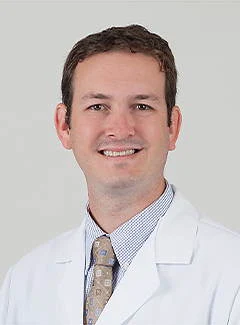
Children born with cleft lip and palate need multidisciplinary care early in life. This affects 1 in 1,000 births and has since the 1960s. As a pediatric plastic surgeon, Jonathan Black, MD, has counseled families from before birth through their journey to healing.
While most cleft palates are easy to diagnose, Black shares some of the subtleties and how UVA Health Children's is working to make diagnostics friendly for children.
What made you decide to focus on pediatric plastic surgery?
I became a plastic surgeon to help people with restoration of their body. Cleft lip and palate became a primary interest of mine when I was a senior resident and has remained that way today.
There are not particular risk factors known as causative of cleft lip and palate. It has been associated with numerous genetic and environmental things, but no causative link has been established and the incidence remains 1:1000 since the 1960s. I often use that information to comfort expecting mothers in the knowledge that they did not do something or not do something to cause the cleft.
Cleft lip and palate are usually straight forward to diagnose, but we do have a few situations worth mentioning. Many patients first learn of the diagnosis by prenatal ultrasound and we see expecting mothers in consultation prior to birth. That is helpful so they know what to expect. Another is when patients have a submucous cleft palate. This presents with speech difficulty prior to kindergarten and is difficult to diagnosis since there isn’t a cleft of the roof of the mouth that is seen on exam.
What’s something about your specialty you wish every referring provider knew?
That while aesthetic results are always considered, plastic surgeons are often misunderstood as only cosmetic surgeons. Cleft lip and palate are an excellent example of what a plastic surgeon can offer to achieve both aesthetic and functional improvement through reconstruction.
How can providers help their patients with cleft palate?
Keep doing what you’re doing --- send patients to our multi-disciplinary team as soon as you suspect the problem is there. Again, a confusing variant is submucous cleft which is where the speech muscles are separated by the mucosa of the palate is intact. There is then no visible cleft, but kids develop issues with speech intelligibility that speech pathologists can’t solve. We have a great new tool with MRI to diagnose this problem more accurately and can avoid nasal endoscopy which is universally disliked by children.
What’s your approach to working with referring providers?
Communication. We have a dedicated cleft nurse coordinator who has over a decade of experience. Lexi Feyerherd is grand central station for connecting with our team and working together.
Depending on the patient's age, then we introduce them to the likely specialists of need for their time point in the journal of cleft lip and palate care. We meet and discuss as a team and involve other services as needed to provide complete care.
What’s one thing UVA Health Children's can offer these patients that you think makes their experience better?
We offer a single room where patients are seen, and each provider comes to them when visiting our team. The advancement of MRI diagnostics allows for more comfortable diagnosis when children have problems with speech after their repair. This means more accurate treatment plans for kids.
Article Topics