Advancing Pediatric Cancer Treatment with Transcription Factor Targeting
Even the most common children’s cancer is rare. This makes everything from funding to recruiting for clinical trials incredibly challenging. For the truly rare pediatric cancers, there’s been almost no meaningful drug discovery.
For Ewing sarcoma, the chemotherapy protocol still in use was developed over 40 years ago. Small changes have been made to improve outcomes, but no new drugs have been developed. And the current standard of care has been consistent for a decade.
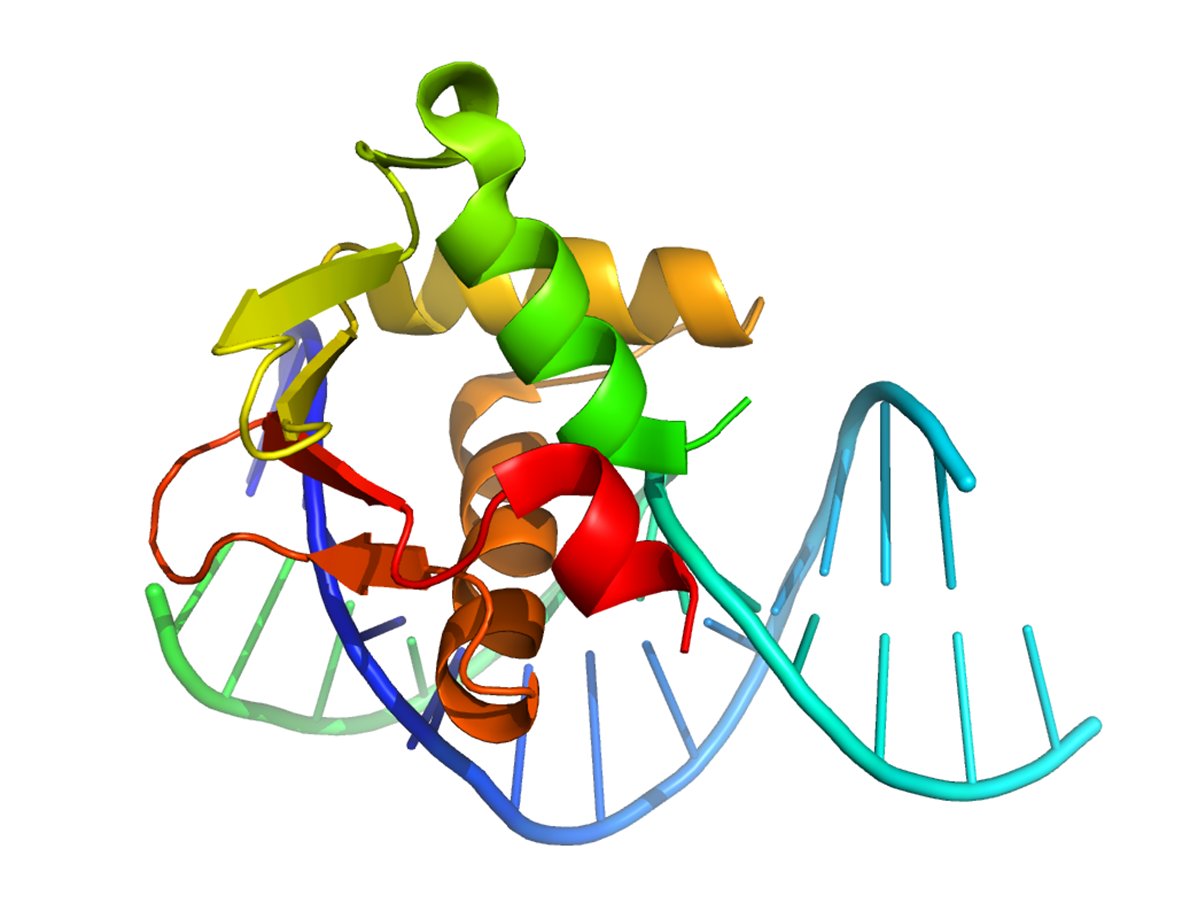
John Bushweller, PhD, Professor of Molecular Physiology and Biological Physics at UVA and co-leader of the Cancer Biology Program at UVA Comprehensive Cancer Center, is collaborating with C-Further, an international consortium dedicated to advancing new therapies for childhood cancers, to develop a new treatment option that targets a transcription factor that fuels Ewing Sarcoma. The goal is a new drug that could offer better outcomes with less toxicity.
Transcription Factors: No Longer Undruggable
Just a few years ago, many specialists would have told you that transcription factors were desirable but ultimately undruggable targets. Bushweller is glad the mindset has adjusted around that. And ultimately, the mindset-shift was driven by evidence of success.
“Recent successes in getting transcription factor targeted drugs into the clinic and having them show efficacy is changing the view,” he says.
These more effective treatments have resulted from new, and better targeting. “The scientific community is developing new approaches to target transcription factors that offer more effective paths for drug development. This is a large focus of the efforts in my own lab. When we can demonstrate proof of principle then the pharmaceutical industry is more likely to pursue these targets.”
Ewing Sarcoma & ETV6
Ewing Sarcoma has been in need of a better, more targeted treatment for a long time. For localized cancer, the 5-year survival rate is 70-80%. But for cancer that has spread, it drops significantly, down to around 30%.
Furthermore the rate of long-term complications with current treatment approaches is very high. Intense chemotherapy and radiation cause issues that include cardiac toxicity, neurological toxicity, and secondary cancers. Targeted therapy could provide better immediate outcomes while reducing rates of those long-term complications.
The mechanism behind Ewing sarcoma is susceptible to transcription factor targeting. “Ewing Sarcoma cells are very dependent on ETV6. When levels of ETV6 were reduced, the cells died. That validation data means if we can make an inhibitor of ETV6, it has a high likelihood of being effective as a treatment for Ewing sarcoma,” Bushweller explains.
Transcription Factor Targeting Risks & Benefits
“Transcription factors regulate the amounts of thousands of other proteins being made typically. So, there is a risk of tipping something to a point where there is a toxicity issue,” Bushweller says.
But it’s worth noting that the medications currently being used also have significant risks. “Like any drug, you are trying to balance the benefits against the risks,” Bushweller explains.
Counseling patients on the potential risks and benefits of treatment before embarking on any particular course is an important part of every patient care journey . But mitigating risk is also part of the core research being done on transcription factors.
“To avoid negative outcomes, it is important to make the inhibitors as selective as possible. It is also essential to test for known possible sources of toxicity to figure out what the best schedule for giving such drugs should be.”
Finding New Models to Develop Therapeutics for Pediatric Cancers
“In the case of rare cancers, as most pediatric cancers are, there is not a strong financial incentive for companies to do the hard, long, and costly work to develop drugs as the economic return is not large enough to justify that effort. As a result, pediatric cancers have had very limited drug development,” Bushweller says.
Additionally, recruiting enough participants for clinical trials can be challenging, and federal funding for childhood cancer research is minimal. But that doesn’t mean other groups aren’t heavily invested in seeing better treatments emerge for pediatric cancers.
C-Further is a consortium that’s been formed to help remove barriers and help drive more innovative treatments for childhood cancers.
“The brilliant insight that Cancer Research UK and C-Further had was to partner biotech (C-Further) with academic investigators (in our case myself, Kim Stegmaier at Dana Farber Cancer Institute, and Miguel Rivera at Mass General Hospital) who have the expertise to drive a drug development effort for targets that will be effective for specific pediatric cancers, in our case Ewing sarcoma. This is a completely unique model for doing this that I believe has a high likelihood of succeeding.”
Applicability to Other Cancers
Transcription factors are a driver in some of the most common cancers. Prostate cancer, leukemia, breast cancer, and more are all potential candidates for future new transcription factor targeting drugs.
And Bushweller’s lab is studying additional applications of transcription factor targeting. “We are currently working on inhibitors of ERG for prostate cancer and leukemia, so we also have ongoing efforts for other cancers. The potential for positive effects in numerous cancers is high, based on a wealth of research that has been done,” Bushweller shares.
But as has been demonstrated before, the best way to get investment in drug development is the clinical success of these therapies. Bushweller hopes that a successful new therapy for Ewing sarcoma, the second most common bone cancer in young people, may lead to increased research and further exploration of transcription factors.
Article Topics