7 Green Flags to Look for in a Lung Cancer Treatment Team
Susan Radlinski, 69, was completely shocked when she learned she had stage III lung cancer. It was like the diagnosis came out of nowhere. A lifelong runner, she had no symptoms and no medical problems. She’d never smoked.
Her shock could have easily turned into overwhelm and anxiety. But it didn’t. Instead, her lung cancer treatment team at UVA Health immediately put her at ease. In her words, they were “right on top of it,” leaving her little time to worry.
After chemo, immunotherapy, and surgery, Susan is running again. The trip she and her husband planned before her diagnosis is back on.
The lesson from Susan’s story is clear: having a lung cancer treatment team she trusted made all the difference. If you’ve been diagnosed with lung cancer, here are 7 green flags to look for as you decide where to go for care.
Green Flag #1: A Coordinated Team Working in Sync
Why it matters: Lung cancer treatment is complex and often includes several types of specialists like medical oncologists, surgeons, and pathologists. If they’re spread across different clinics and health systems, communication may be slower or less consistent.
A coordinated team can share information quickly, bring different areas of expertise to the same decision, and develop a thorough plan together.
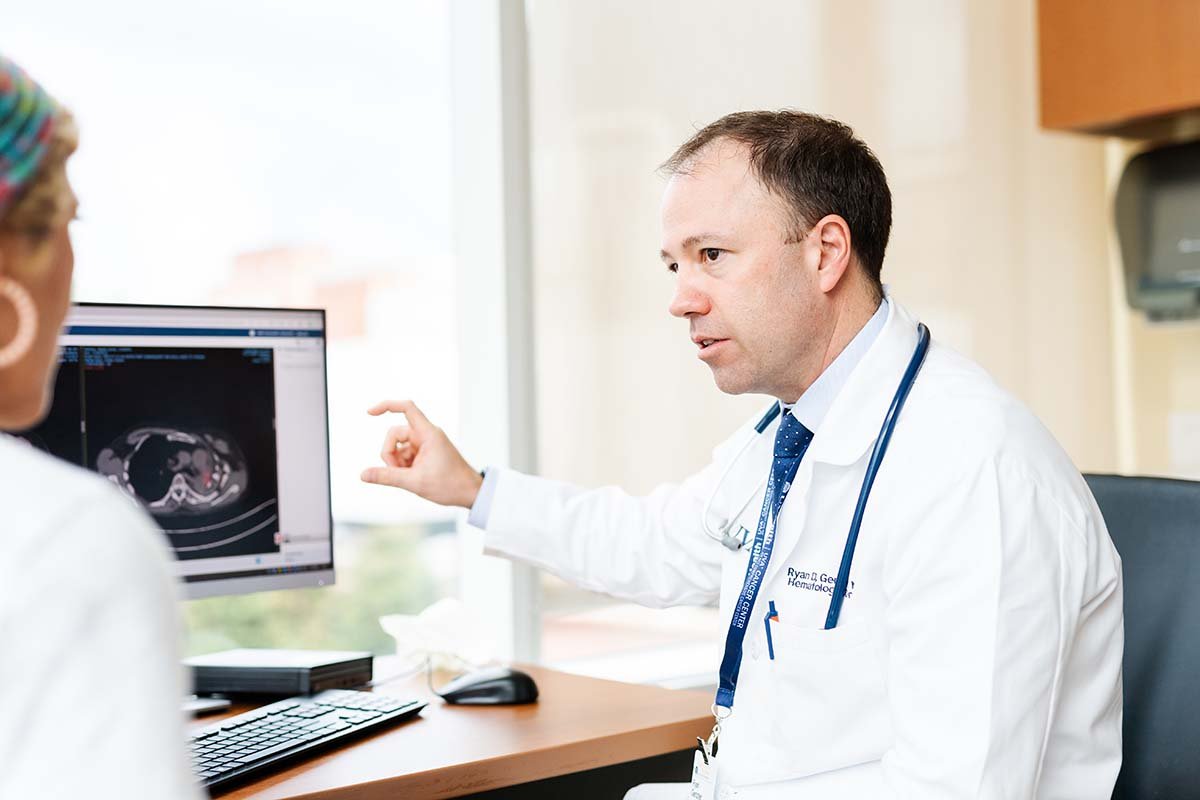
One sign of a coordinated team is a tumor board. A tumor board is a regular meeting with all specialists involved in a patient’s care. They review the patient’s case in detail from all angles — the person’s medical history, their specific type of cancer, test results, and more — and make decisions together.
Susan recalls getting in for her first appointment at UVA Health Comprehensive Cancer Center quickly. The lung cancer tumor board had already reviewed her case.
“They already had a plan in the works, which was really comforting,” she shares.
The tumor board continued to review her case regularly, so they could review new information as it came in and update her treatment plan as needed.
What to ask: Will my case be reviewed by a lung cancer tumor board? Will the team review it again as treatment progresses?
Green Flag #2: Specialists Who Know Lung Cancer Inside & Out
Why it matters: Lung cancer treatment changes quickly. Specialists who focus on cancers of the chest may be more familiar with the latest testing, treatments, and surgical options.
“Lung cancer management has become complex because there have been so many advances and changes,” explains thoracic surgeon Linda Martin, MD.
A general oncologist may treat many types of cancer. By contrast, Susan’s team included a thoracic medical oncologist and thoracic surgeon, who both focus on lung cancer and other cancers of the chest.
What to ask: How much of your work focuses on lung cancer? How many patients with my type of lung cancer do you treat each year?
Green Flag #3: Treatment Based on the Latest Evidence
Why it matters: The lung cancer treatment considered standard a few years ago may not be the best approach today. Your treatment team should be able to explain the latest evidence and how it applies to your case.
New research has led to many changes in lung cancer care. But those advancements don’t become standard practice everywhere overnight. It takes time for new information to move into everyday care, as teams learn about and gain experience with newer approaches.
In the past, specialists likely would have recommended that Susan have surgery before chemo and immunotherapy, based on her type of cancer. But that thinking changed several years ago when research showed better long-term outcomes with treatment before surgery.
By the time she had surgery, Susan’s tumor had shrunk to just 10% of its former size.
What to ask: What evidence supports this treatment plan? What does the latest research say about my type and stage of lung cancer?
See These Green Flags In Action
Susan’s experience shows how coordinated care, specialized expertise, and genomic testing can shape a lung cancer treatment plan.
Green Flag #4: Biomarker Testing Beyond the Basics
Why it matters: Biomarker testing can uncover details about what’s driving a cancer. Those details may affect which treatments are most likely to help.
In-house testing allows teams to get results faster, which they may need to make major decisions about treatment.
Biomarker testing, also called molecular testing or genomic testing, looks for changes in genes, proteins, or other features inside cancer cells. The results can help doctors:
- Choose a targeted treatment
- Decide whether immunotherapy is likely to help
- Identify clinical trial options
- Avoid treatments that may be less useful
Susan was a never smoker with a type of non-small cell lung cancer called adenocarcinoma. Thoracic medical oncologist Ryan Gentzler, MD, knew that made her cancer more likely to have an uncommon genetic change.
Susan’s first biopsy didn’t provide enough tissue for broad genomic testing. The team ran a smaller set of tests, but the results came back negative.
The team was able to get a larger tissue sample when Susan had surgery. They ordered broader testing of more than 500 genes. Because UVA Health performs this testing in-house, the results came back in under two weeks.
The testing showed that Susan’s cancer had a rare change called a RET rearrangement, found in just 1-2% of non-small cell lung cancers.
What to ask: Will my cancer receive broad biomarker testing? What happens if the first biopsy doesn’t provide enough tissue?
Green Flag #5: Treatment Plans Change With New Information
Why it matters: A good treatment plan should be specific, but it shouldn’t be rigid. Your team should consider new information as it comes in and adjust your plan if needed.
Treatment plans may change based on:
- How much the tumor shrinks
- What doctors find during surgery
- Whether cancer has reached the lymph nodes
- How well you tolerate treatment
- New clinical trial options
- Your goals and priorities
Susan’s RET rearrangement wasn’t discovered until after surgery. Gentzler explains this result meant additional immunotherapy was less likely to help her cancer. The team adjusted Susan’s plan based on this new information.
What to ask: What new findings could change this plan? When and how will you reassess whether it’s still the best approach?
Green Flag #6: Nationally Recognized Expertise
Why it matters: Outside designations and recognition can help you assess a cancer center’s reputation and understand what they offer.
One of the most important to look for is National Cancer Institute (NCI) designation. This designation marks top tier centers that meet rigorous standards for cancer care, research, and prevention.
Another is Commission on Cancer (CoC) accreditation, which means a center meets key standards that affect patient survival and quality of life.
In Susan’s case, UVA Health’s NCI designation as a comprehensive cancer center and CoC accreditation let her know she was in good hands.
What to look for: Both the NCI and CoC have online databases where you can look up a center’s status. That means you don’t have to ask. See whether a center is NCI designated or CoC accredited.
Green Flag #7: You Feel Informed, Prepared, & Cared For
Why it matters: Your team should help you understand what’s happening and feel prepared for what comes next. That means you should feel comfortable asking questions, know who to contact, and understand why your team recommends each step.
Before Susan’s surgery, Martin’s team gave her a notebook explaining:
- How to prepare
- What would happen during surgery
- What recovery might feel like
- What she would need to do after
“I read that cover to cover many times,” Susan says. “I felt very prepared going in.”
Susan’s husband, Jim, says the team helped him prepare to support her through treatment.
Susan’s praise wasn’t limited to her doctors.
“The physicians, their staff, and even the people in the support positions were just so kind and caring,” she says. “Everybody made this experience as good as it could be for a person going through cancer.”
What to ask: Can you explain the care plan and why you recommend it? Who can I contact when I have questions? How can my caregiver be involved?
Article Topics