Black Maternal Health Week: Our Bodies Are Our Own

The opening scenes of Aftershock feel like an advertisement for pregnancy. Home movie clips show Shamony Gibson, a young Black woman. She’s grinning at the camera. Getting ready to workout. Playfully interacting with her partner. Loving her family. She laughs and smiles generously.
Then we meet Amber Rose Isaac, another young Black woman. We see her instructional video on gardening, a bag of organic soil and mason jars displayed on her countertops. She’s an aspiring special education teacher, preparing to dedicate her life to helping others.
They’re both just starting their lives. We’re shown how loved they are. How eager they are. How overjoyed they are about their pregnancies.
Neither knew they would die from complications in pregnancy. They were both young, healthy, and getting regular prenatal care. Low-risk by any measure. Their deaths were preventable.
Unfortunately, as Aftershock quickly shows us, these aren’t isolated stories.
Black Maternal Health Week
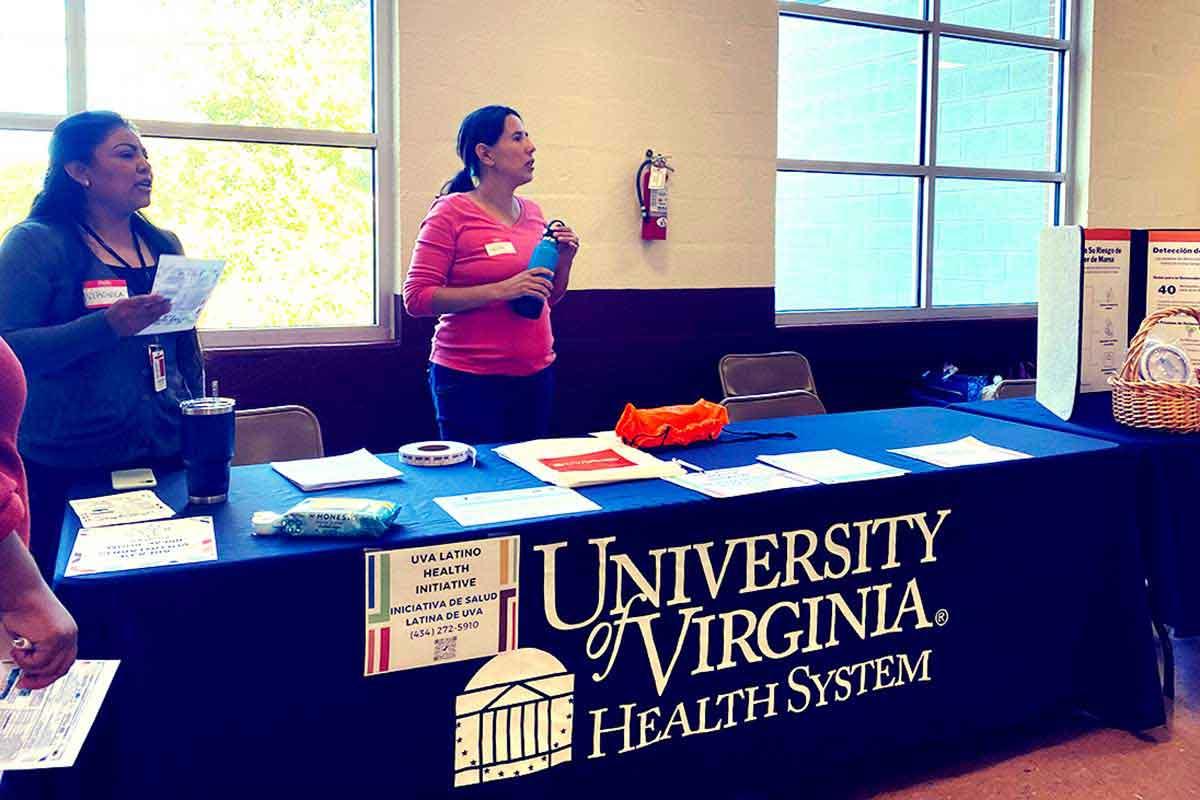
The Aftershock screening was one of several events UVA Health hosted for Black Maternal Health Week (BMHW).
Established in 2021, we observe BMHW annually from April 11-17th. This week focuses on improving equality in maternity care. Founded by the Black Mamas Matter Alliance, BMHW is a direct response to the Black maternal care crisis.
The Black Maternal Care Crisis
The United States is the only industrialized nation with an increasing maternal mortality rate. And for Black women, those numbers are worse. A Black woman is 3 times as likely to die from pregnancy complications as a white woman.
Aftershock dives into the reasons. Ultimately, it boils down to racism. Both today, and also through the history of women’s healthcare (gynecology).
The movie discusses the role of racism in maternity care. Most early research into childbirth used enslaved women as guinea pigs. Researchers ignored their feelings, voices, and experiences. The researchers believed these women didn’t feel pain, even as they cried out in obvious anguish.
As recently as 2016, many doctors believed that Black women experienced less pain than white women. This view stems from research done during the early days of gynecology, when Black women were seen as less than. When we use the conclusions of those studies in ongoing research, we compromise new results as well.
Black Maternal Healthcare in Virginia
The Black Maternal healthcare crisis touches every state, including Virginia.
In 2017, 44 Virginian women died due to pregnancy complications. In 2021, that number climbed to 108.
Of those, 58% were preventable.
Though the numbers aren’t as well documented, we’ve had a similar rise in pregnancy complications. While not life ending, these events are life-altering. And they’re also affecting Black women more.
Recent Changes in Virginia
Fixing these issues is a high priority in Virginia. Since 2022, some maternal health changes include:
- As of 2022, doulas are covered by Medicaid in Virginia.
- Medicaid has expanded to extend 1 year after birth.
- FAMIS prenatal coverage now covers mothers for 60 days after birth.
- A robust COVID-19 response developed for pregnant women and new moms.
Legislators adopted these from the Momnibus, a set of bills developed by the BMMA and supported by the Black Maternal Health Caucus.
Subscribe to Our Newsletter
Get health news in your inbox.
What UVA Health Is Doing
At UVA Health, we train new doctors, nurses, and other healthcare providers. We’re also a primary hospital for pregnancy and birth services in Virginia. As such, we play a critical role in improving maternity care.
Although many hospitals go years without seeing a pregnancy-related death, they don’t need to wait to improve their processes, says Christian Chisholm, MD. Chisholm, a high-risk pregnancy doctor at UVA Health, served as a panelist at the Aftershock screening.
He suggests that providers approach pregnancy complications as opportunities to “identify areas for improvement before a mortality occurs.“
Another best practice Chisholm encourages: creating standard care plans. Evidence-based practices in these plans can prevent most of the common causes of death. Followed correctly, these plans can ensure that everyone gets the same standard of care.
Listening to the Living
Perhaps most importantly, Chisholm believes in engaging with and listening to the community. “Their experience of their care can be discordant with our intent. Understanding their experience helps us get better.”
As part of that listening effort, UVA Health has formed a relationship with the Birth Sisters of Charlottesville. These doulas of color provide a trusted ally to Black women navigating their pregnancy. They’ve also helped our doctors understand their patients’ journeys.
As Lisa Brown, one of the founders of Birth Sisters, shared, “What we’ve witnessed is that when people have choices and they feel like they can make the choices that are best for them that the outcomes seem to be better.”
Doulas, acting as advocates, help empower mothers in labor to make and communicate their choices.
Restoring Black Autonomy & Joy
The theme for 2023’s Black Maternal Health Week is “Our Bodies Are Our Own: Restoring Black Autonomy and Joy.“ The focus is helping Black women reclaim autonomy over their own body and finding the joy of pregnancy.
Because really, survival should be the floor, not the ceiling.
The Black Mamas Matter Alliance asks us to see a future where Black women not only survive pregnancy, but where their pregnancies can be joyful. Where patients feel in control of their own bodies. And where doctors listen to patients’ concerns and respect their birth plans.
These efforts won’t only improve survival rates. They’ll also reduce serious complications, infant mortality, and birth trauma.
What Aftershock shows us is that if doctors had heard Amber Rose Isaac and Shamony Gibson, they’d still be here. And we’d all be better for it.
Subscribe to Healthy Balance
Get timely health and wellness tips from UVA Health experts. Plus, stories that will move you.