New Findings Could Help Prevent Strokes in Young People
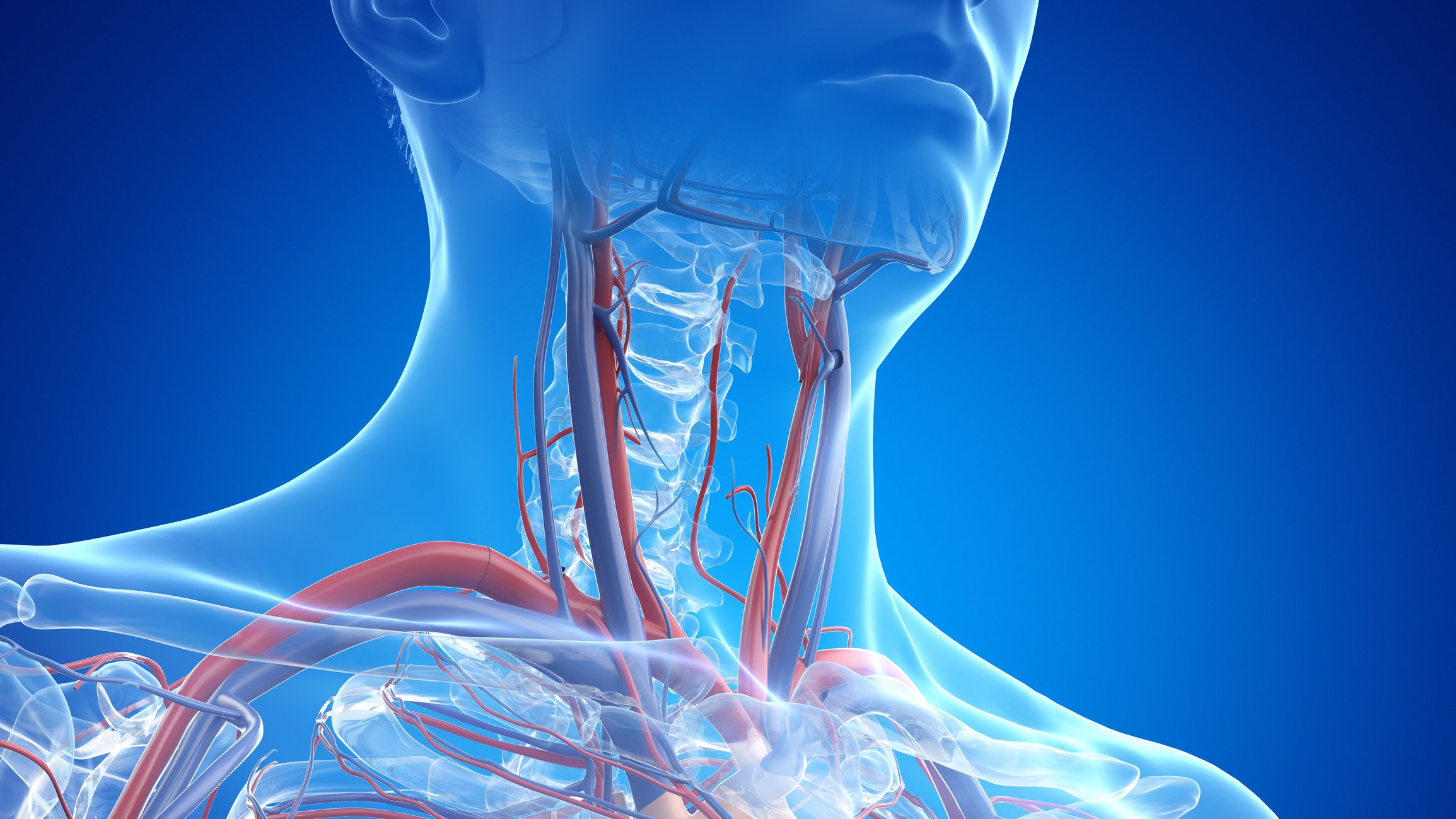
A cervical artery dissection is a tear that occurs within the walls of the arteries that feed blood to the brain. These tears can allow blood to pool and cause blockages – strokes – that starve the brain of oxygen.
UVA Health stroke researchers have identified a distinct and temporary pattern of gene behavior during cervical artery dissections, a leading cause of stroke in young people. These unusual gene changes may help explain the dissections and could lead to new ways to prevent potentially debilitating strokes among the young.
Finding ways to prevent cervical artery dissections is particularly important not just because of the devastating effects strokes can have but because of the many years of disability they can cause for younger patients, noted UVA Health stroke expert Andrew M. Southerland, MD, MSc. Cervical artery dissections can occur without warning and are responsible for 1 in 5 strokes among people under 55.
“Stroke is a devastating disease at any age. People suffering cervical artery dissections are often young or in the prime of their adult years and are therefore even more prone to the disabling impact of this sudden, often unexplained occurrence,” said Southerland, part of the Departments of Neurology and Public Health Sciences at the School of Medicine. “Understanding the genetic and environmental risk factors associated with cervical artery dissection takes us a step closer to identifying those at most risk and, ideally, preventing it from occurring.”
Cervical Artery Dissection and Stroke
A cervical artery dissection is a tear that occurs within the walls of the arteries that feed blood to the brain. These tears can allow blood to pool and cause blockages – strokes – that starve the brain of oxygen. Cervical artery dissections can be caused by minor neck trauma, such as whiplash or chiropractic adjustments, or by certain genetic disorders, but most cases are deemed “spontaneous” and have no obvious cause.
Southerland and colleagues wanted to better understand what could be causing these abrupt arterial tears in patients without trauma, so they looked at 37 UVA patients with the condition and compared them with healthy people – the patients’ spouses or friends or volunteers from the local community.
The researchers hypothesized that the patients would have a “signature” pattern of gene activity at the time of the dissections, akin to patterns seen in other sudden vascular events such as aneurysms. This proved to be the case – the patients had substantial differences in the activity of 11 genes shortly after their dissections than was seen in the healthy study participants.
Further, the patients had different gene-activation patterns shortly after their dissections than they did later on, suggesting that the distinctive gene activity was temporary. Most of these genes were focused on the body’s use of hemoglobin, the substance that transports oxygen in our blood. Hemoglobin also plays an important role in clotting.
Based on those results, the researchers suspect that impaired oxygen transport could predispose people to cervical artery dissections, or that hemoglobin could be playing some other role, such as by triggering systemic conditions in the body predisposing to arterial vulnerability.
The scientists are eager to do further research to explore those possibilities and, hopefully, find ways to prevent strokes. “This work remains highly preliminary, and we need to replicate it in other larger and more diverse groups of patients,” said Southerland, part of UVA’s Comprehensive Stroke Center. “We are currently working with an international team of collaborators to continue studying genetic causes of cervical artery dissection and look forward to bringing these research opportunities to our patients here in Virginia and abroad.”
Finding new ways to improve human health and better prevent and treat serious conditions such as stroke is the driving mission of UVA’s new Paul and Diane Manning Institute of Biotechnology. The institute aims to accelerate how quickly lab discoveries can be translated into treatments that will benefit patients across Virginia and around the world.
Findings Published
The researchers have published their findings in the scientific journal Neurology Genetics. The research team consisted of Robert B. Ferguson, Ilana E. Green, Timothy L. McMurry, Keith L. Keene, Stephen R. Williams, Fang-Chi Hsu, Stefan Bekiranov, Hyacinth I. Hyacinth, Glen C. Jickling, Michèle M. Sale, Bradford B. Worrall and Southerland.
The research was supported by American Heart Association/American Stroke Association (AHA/ASA) National Clinical Research Program 13CRP141.
To keep up with the latest medical research news from UVA and the Manning Institute, bookmark the Making of Medicine blog.
Media Contact

Joshua Barney
Deputy Public Information Officer