Robotic Heart Valve Surgery at UVA Health Helps Even the Most Difficult Cases
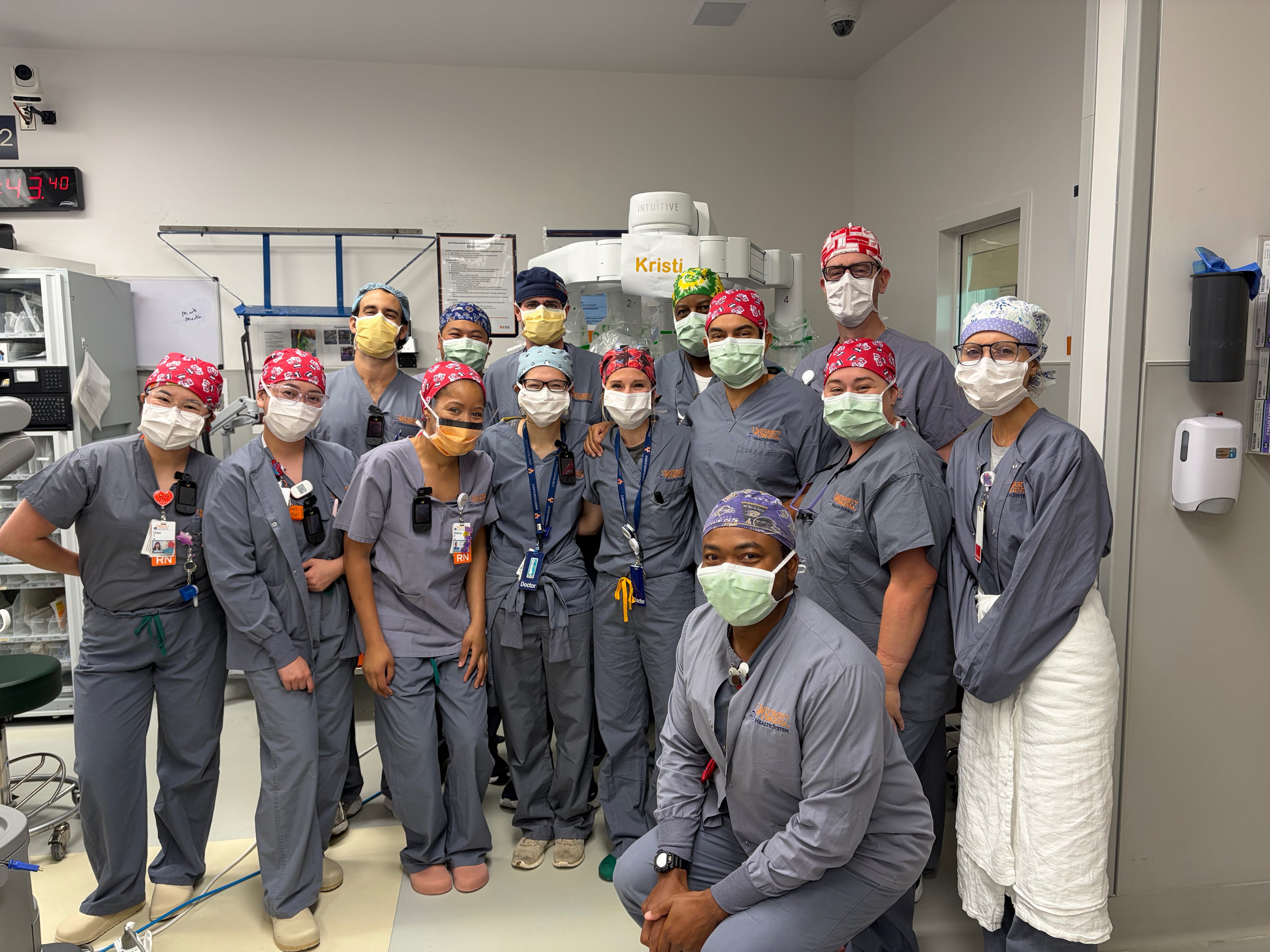
The robotic heart surgery team poses with the surgery robot, named KRISTI
Many patients want the quicker and easier recovery that can be had with less invasive alternatives to traditional open-heart valve surgery. At UVA Health, a growing number of patients can opt for robotic cardiac surgery to treat their heart conditions.
Our robotic heart surgery program is treating more valve patients than ever before, including many who were turned away from robotic surgery elsewhere. We spoke with Michael Ibrahim, MD, director of the robotic cardiac surgery program at UVA Health, to discuss how this approach is changing valve care for patients across Virginia and beyond.
From Simple Cases to the Most Complex
Robotic heart surgery isn't new. But what it can treat has changed a lot in a short time.
"Traditionally, very simple operations were done robotically, including straightforward mitral valve repair or replacement," Ibrahim says. "Today, we can do very complex operations robotically, including repair, replacement, re-repair, multi-valve operations, and operations on patients with traditional contraindications to robotic or minimally invasive cardiac surgery."
That last part matters most for referring providers. Patients who were once told they weren't candidates for a minimally invasive approach may now qualify. Ibrahim says only a small number of patients are ruled out today. This includes patients with prior cardiac operations, chest wall deformities, and high-risk patients. "As our experience with robotic cardiac surgery has grown, we've expanded the number and types of patients that we're able to operate on," he says.
Safety always comes first. If a patient isn't a good fit, the team will talk with them about other options that make sense for their case.
Small Incisions, Big Differences in Recovery
Traditional open-heart surgery through a sternotomy can take months to heal, and recovery may be painful. But since robotic cardiac surgery uses only small incisions without sternotomy and rib spreading, "We often find that we're able to discharge patients in only three or so days, and they have no restrictions when they leave the hospital and can return to physical activity as soon as they feel able to," Ibrahim says.
Compare that to a typical recovery after open surgery, where patients usually are unable to lift more than 10 pounds for six to eight weeks. With robotic surgery, Ibrahim says recovery is "limited only by the patient's feeling of what they can do at that point in time."
Why the Robotic “Wrist” Makes a Difference
During open surgery, a surgeon relies heavily on feel, using their fingers to guide the operation. Robotic surgery works differently, and Ibrahim says that's an advantage.
The robot’s “wrist” moves with more range than a human wrist. Paired with a magnified, high-definition view inside the heart, surgeons can reach small spaces with more precision than traditional surgery allows.
"This is one of the reasons that we feel this can be an ideal platform for patients who are good candidates for robotic cardiac surgery," Ibrahim says.
A Team-Based Approach, From Diagnosis to Recovery
Valve disease treatment rarely rests on one decision made by one doctor. At UVA Health, the process starts with the cardiologist and imaging team, who help define the problem. From there, partnership and a team-based approach help guide the patient through their choices, whether that's a catheter-based option, traditional open surgery, or a robotic approach.
"Once the patient has made that choice, we work together as a team, often across specialties, using anesthesia, nursing, the surgeon, the cardiologist, the intensivist, and others," Ibrahim says.
After surgery, the focus shifts to getting patients moving quickly. Many patients have their breathing tube removed in the operating room and are up and out of bed within hours. "That is the key to promoting rapid recovery and return to functional health within a few days of the operation," notes Ibrahim.
Follow-up doesn't stop at discharge, either. Patients are seen again a few weeks after surgery, and the team continues to co-manage their care over the long term.
Strong Results Across a Wide Range of Patients
Ibrahim says the program's growing experience includes patients who are relatively low risk, as well as patients with complex medical histories who may not have been offered a minimally invasive option elsewhere.
"Our latest results cover over 250 patients with no deaths or strokes or valve failures," he says. "We believe that is a testament to careful consideration of each patient, teamwork, and dedication to our mission of treating heart surgery patients with excellence."
UVA Health is also playing a role in training surgeons from around the country and world in robotic surgery techniques, helping expand access to this approach well beyond Virginia.
When to Consider a Referral
If you have a patient facing valve surgery who is hesitant about a long recovery, or who was previously told they weren't a candidate for a minimally invasive approach, it may be worth a second look. The robotic heart surgery program at UVA Health is built to evaluate the full range of valve disease, from straightforward cases to patients who have been turned down for surgery elsewhere.