Setting & Reaching Functional Goals with Pediatric Physical Medicine
As a pediatric physical medicine and rehabilitation specialist, William Ide, MD, works to improve the quality of life and functional independence for children. As part of multidisciplinary teams at UVA Health Children's, he helps create treatment plans that meet families where they're at and helps them reach their goals.
He shares what led him to this specialty and why he finds it so rewarding.
What made you decide to focus on pediatric physical medicine and rehabilitation?
When I was in college, I spent my summers working as a counselor at an Easter Seals camp. I discovered a true passion for working with children who have disabilities. I knew then I wanted to be a doctor, but I did not know the field of pediatric rehabilitation medicine existed until medical school. Once I found out I could work with children who have disabilities as a doctor, I knew this was my calling.
What's your favorite part of working in this field?
I love having the opportunity to develop long-term therapeutic relationships with children and their families. I enjoy seeing their growth and development through the years and it is incredibly rewarding to be a part of helping them reach their full potential. I’ve found that children rarely need motivation to overcome challenges; they simply need a little support and it’s an honor to help provide that.
How can referring providers help their patients with early detection, and what risk factors should they be looking out for?
I hope all providers will continue routine developmental surveillance using standardized screening. This is especially important for any child who is failing to meet developmental milestones, has additional risk factors for cerebral palsy (prematurity, low birth weight, hypoxia at birth), motor asymmetry, persistent primitive reflexes, or a history of traumatic brain or spinal cord injury causing persistent deficits. If there are any concerns, prompt referral is very important.
Any child who has a neurodevelopmental diagnosis, persistent motor delays, limb differences, brain or spinal cord injury (congenital or acquired), abnormal tone, or functional limitations, or when complex equipment, spasticity management, or coordinated multidisciplinary care is needed. I also see pediatric patients who are in need of concussion care. If you are considering placing a referral to pediatric PM&R, please do and I will find a way to help!
What do you wish more providers knew about physical medicine and rehabilitation?
We are still among the smaller pediatric subspecialties with less than 400 of us currently practicing in the United States. Knowing that we have pediatric physiatry capability here at UVA Health Children's is important. The patient’s function is the primary focus of what we do. We work to optimize mobility, age-appropriate independence, and participation through coordinated, interdisciplinary care. We have particular expertise in managing tone and complex equipment needs.
What happens after a child is referred to your program?
A collaborative, interdisciplinary approach is the heart of rehabilitation medicine. I really love to communicate as much as possible with different members of a child’s care team, including referring providers, and I believe patients and families appreciate this too. Communication between care coordinators can also go a long way toward alleviating logistical burdens and negotiating barriers for families.
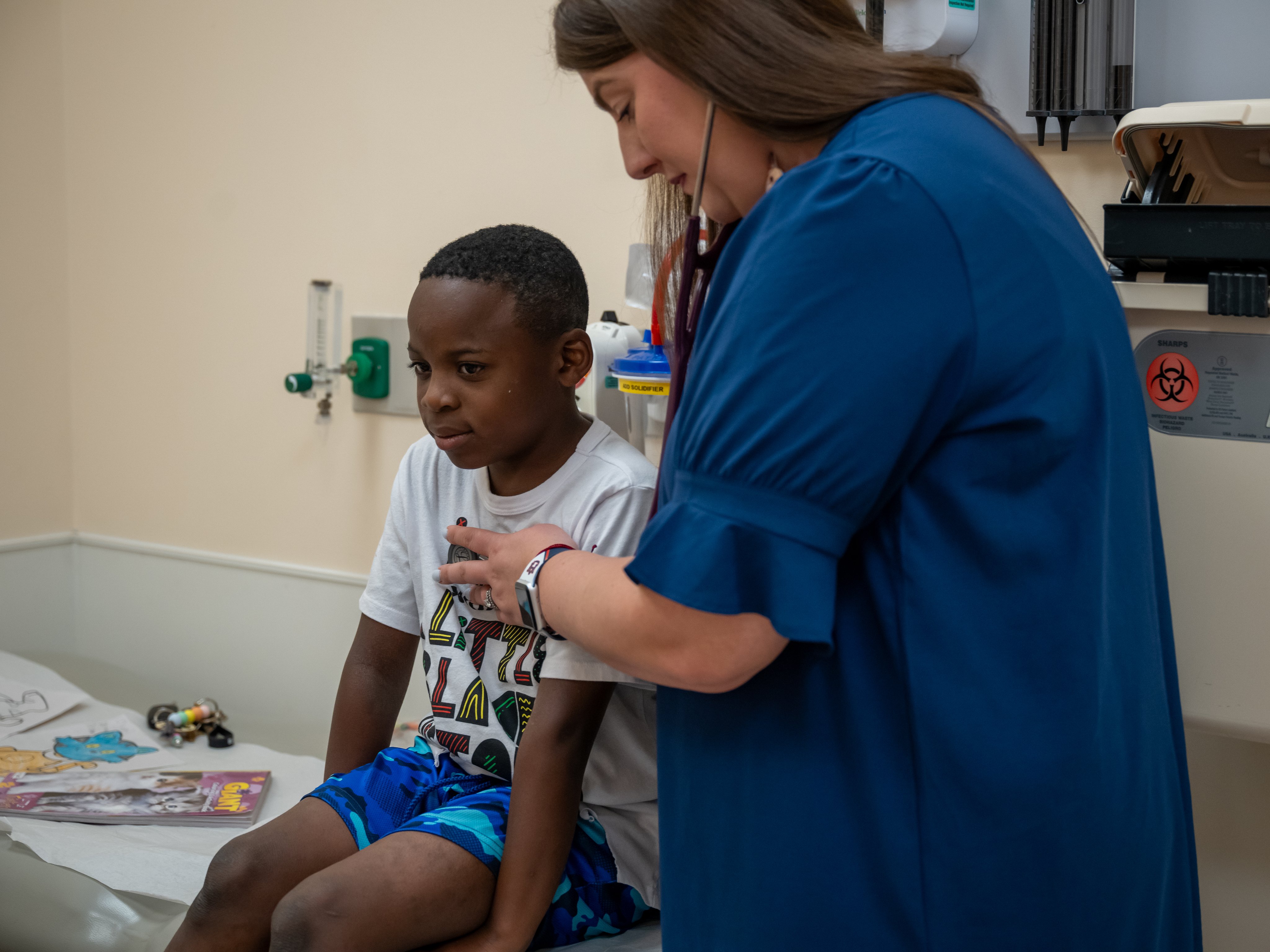
Prior to meeting a new patient, I spend time completing a thorough chart review in preparation. Some children have previously been followed by pediatric physiatry, most have not. I typically start off the encounter explaining the scope of my specialty and that our emphasis will be on function. I take a thorough history, hoping to understand what the child can do today, what’s difficult, and what matters most to them and their family.
I perform a detailed neuromuscular examination, tailored to the patient’s developmental age. We end the visit by aligning on clear, achievable goals, outlining next steps (therapy focus, equipment needs, spasticity or pain management if relevant), and making sure the family understands the plan and timeline.
Most importantly, I explain the importance of our longitudinal partnership rather than a solitary consult. I will be with the family indefinitely to provide support as the child grows, develops, and their functional needs change.
What can UVA Health Children's provide these families that makes their experience better?
Beyond pediatric physiatry, UVA Health Children's offers robust, full-spectrum pediatric subspecialty care, including orthopaedics, developmental pediatrics, prosthetics and orthotics, neurosurgery, neurology, psychology, urology, physical therapy, occupational therapy, speech language pathology, nutrition, and more. We have a number of multidisciplinary clinics, which allow various specialists and therapists to complete simultaneous evaluations and provide patients with comprehensive care plans without having to schedule and attend multiple appointments.
Article Topics