Decoding NF1 Tumor Development: New Insights, New Treatment Possibilities
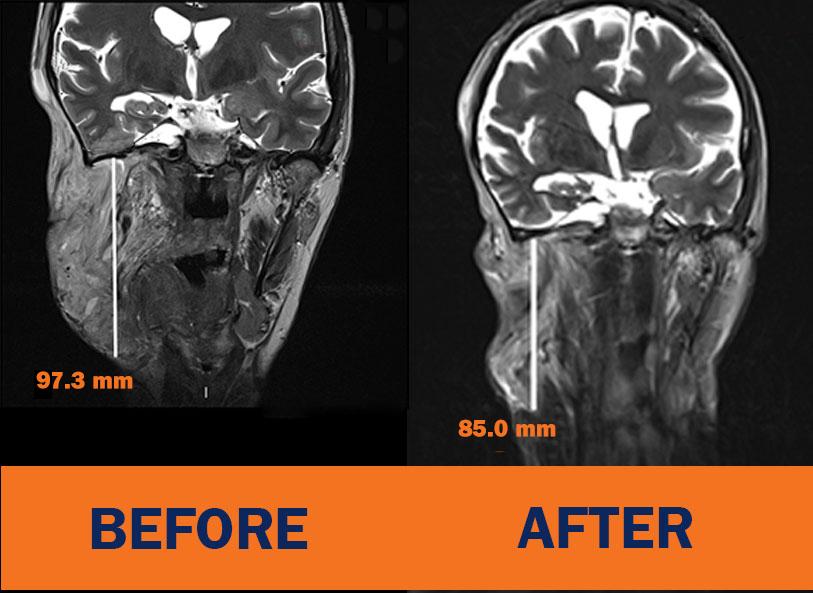
Neurofibromatosis Type 1 (NF1) is a genetic condition that can cause tumors called neurofibromas to grow along nerves, leading to pain, disfigurement and other serious complications. Physician-scientist Lu Le, MD, PhD, chair of the UVA Department of Dermatology, is working to understand how these tumors begin and how surrounding cells contribute to their growth.
Le’s laboratory studies the interplay between genetics, tumor cells, and the tumor microenvironment, with the goal of identifying ways to target neurofibromas at their earliest stages. His research has led to new models of NF1 tumors that are revealing the biological pathways behind tumor development and potential treatment targets. Le hopes this work can lead to therapies that delay or prevent tumor formation in patients with NF1.
He shares more about his research, his path to cancer science, and his vision for the future of dermatology in this video and Q&A.
As a researcher, it is so fun to make discoveries that no one else in the world have seen before. To find something out for the first time, like looking into the microscope with my students, seeing something that no one else has seen. Those are priceless moments. It is so fun that sometimes I cannot believe I get paid doing what I'm doing.
My name is Lu Le. I am a professor and chair of the department of dermatology at UVA. Our lab studies cancer biology and stem cell biology. We're very interested in understanding how cancer hijacks normal development to their advantage. We specifically focus on neurofibromatosis, a group of genetic conditions that cause tumors to grow on the nerve.
I hope to see how research that we do in the lab can turn into effective treatment that makes a big impact for many people around the world. Our lab has generated multiple novel models of neurofibromatosis to uncover its fundamental biology that we hope will lead to effective treatment for patients with neurofibromatosis. In addition, with our discovery of the epithelial stem cells in the hair follicle that are required for hair formation, we are investigating their potential in human hair follicle for their ability to restore hair growth.
What are you working on right now?
Our laboratory investigates how genetic and tumor microenvironmental factors interact to regulate carcinogenesis. My principal scientific interests include identifying the cells of origin for tumorigenesis and elucidating the roles of the tumor microenvironment in cancer development. We study the cellular and molecular mechanisms underlying tumorigenesis from a developmental perspective, with a particular interest in how cancer hijacks normal processes. Our work focuses especially on NF1, a human genetic disorder that predisposes individuals to neurofibromas, which grow on nerve tissues.
What are the most intriguing potential clinical applications of your work?
Our laboratory aims to identify potential therapeutic windows for targeting neurofibroma tumors in NF1 patients at the earliest stages. Targeting the tumor microenvironment would represent the next step in the evolution of antitumor design and a dramatic paradigm shift in the clinical management of NF1. While focused on neurofibroma, this work also raises the possibility that surrounding non-neoplastic cells may influence the growth of other tumor types. A greater understanding of these tumor-associated cells may lead to new directions for cancer therapy and prevention.
What recent discovery/paper/presentation has impacted the way you think?
Using genetic lineage tracing, we have defined the developmental origin of NF1-associated neurofibroma and generated novel mouse models of these tumors, including a humanized model, to study their biology and enable preclinical trials. These models have provided important insights into the molecular pathways critical for tumor development and helped identify therapeutic targets. Our studies have addressed fundamental, unanswered questions in the NF1 field and could lead to novel and potentially effective therapies aimed at delaying or preventing tumor formation in NF1 patients, for whom no curative therapy currently exists.
What made you choose UVA Health as the place to do your research?
I joined UVA School of Medicine as Chair of the Department of Dermatology in 2024. What attracted me to UVA was the opportunity to further develop our department into an elite one and strengthen the research and reputation of dermatology at UVA. This appointment gives me the opportunity to work with our current faculty to recruit world-class clinicians and scientists with diverse expertise, make a lasting impact on the future of our department, and build on UVA School of Medicine’s long tradition of excellence in research and patient care.
What do you wish more people knew about your area of research?
Individuals with NF1 suffer from severe internal tumors, chronic pain, and learning disabilities. They may also have visible tumors that can lead to severe disfigurement and social stigma. The more people understand NF1 and the research addressing it, the more we can transform this rare disease into a recognized condition that is more visible to the public, helping reduce social stigma, staring, and isolation. Greater awareness can also attract more funding, scientists, and clinicians to the field to develop effective treatments.
How did you become interested in your area of research?
There are many engineers and teachers in my family, and I originally wanted to become an aerospace engineer. However, a college job I took to help pay for tuition led me to medicine. Working in the laboratory of Dr. Owen Witte, a highly regarded cancer researcher at UCLA, sparked my interest in science and medicine, particularly cancer biology. I was inspired to see how experiments conducted in the laboratory could translate into effective treatments that impact people around the world.