UVA Health First in Virginia to Use New Way to Detect Heart Disease
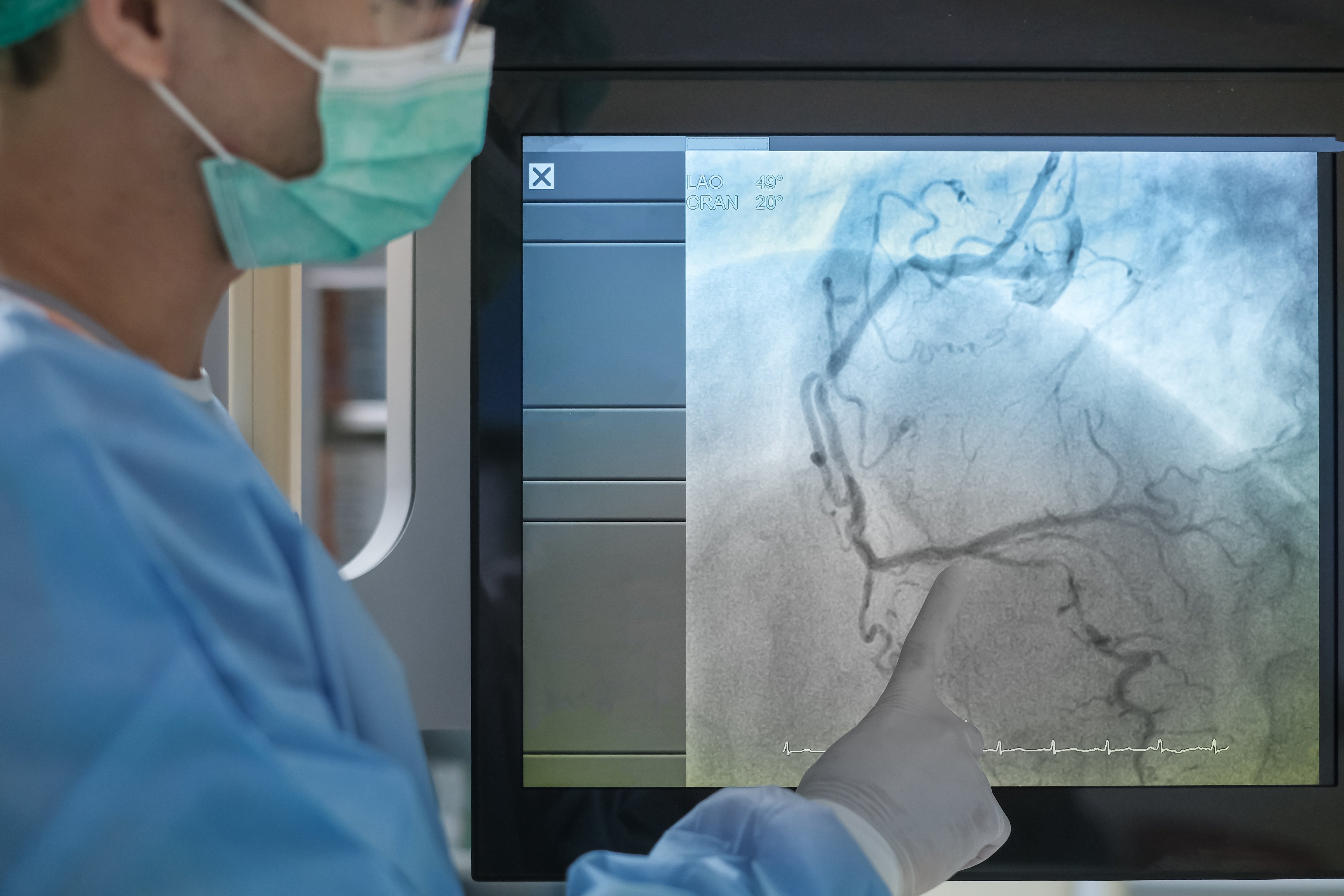
Cardiovascular disease is the leading cause of death in the U.S., for both women and men. But, traditional coronary angiography, a test commonly used to detect heart disease, can miss some diagnoses of specific types heart disease that reduce blood flow to the heart (called ischemic heart disease). This is especially a problem in women, as they're more likely to have the kinds of ischemic heart disease that angiography may miss.
UVA Health was the first health system in Virginia to use a new comprehensive test aimed at improving how we spot heart disease. The test, called coronary function testing, gives doctors a more complete picture of how the heart’s blood vessels are working, rather than only detecting blockages in the coronary arteries.
Why Heart Disease Can Be Harder to Find in Women
To find the cause of symptoms like chest pain, coronary angiography uses X-ray images and contrast dye to see if a buildup of cholesterol and other substances (called plaque) in the large heart arteries is blocking adequate blood flow to the heart (a condition called atherosclerosis).
This approach works well for many patients. However, women are more likely than men to have heart symptoms that don't stem from large blockages. Instead, the problem may be in the smaller blood vessels that branch off from the main arteries. This smaller network of vessels is called the microvasculature.
“We now have a way to say, ‘Well, it might not be the big coronary arteries, the epicardial coronary arteries, but it could be this microvascular network that is dysfunctional,’” explains Patrick Stafford, MD, a heart disease specialist and professor of cardiology at UVA Health.
This system of smaller blood vessels actually makes up the majority of the heart’s blood supply. When it doesn’t work properly, it can limit blood flow to the heart muscle, causing a condition called coronary microvascular disease (CMD). CMD can cause chest pain and other symptoms, even when the larger arteries look normal.
Stafford goes on to say, “Up to half of patients undergoing coronary angiography have no obstructive coronary artery disease [blockages in large blood vessels]. Patients with coronary microvascular disease can be at as high of a risk for major adverse cardiac events as patients with coronary disease, so it's not at all a benign condition.”
How Coronary Function Testing Works
Coronary function refers to how well the heart’s blood vessels relax, tighten, and respond to the body’s needs. If the blood vessels aren’t working properly, your heart may not get enough oxygen-rich blood. That can cause symptoms like:
- Chest pain
- Trouble breathing
- Neck, jaw, or arm pain
- Nausea
Coronary function testing is done during a heart catheterization procedure. In addition to the “usual” coronary angiogram, we use a very thin wire placed down the coronary arteries to take special measurements inside your blood vessels. This wire measures blood pressure, blood flow, and resistance in the arteries.
“Through taking these measurements, measuring the pressures, we can determine some specific indices that help us determine if someone has coronary microvascular dysfunction,” Stafford says.
During this microvascular testing, we give specific medicines to see how the blood vessels respond. This helps us understand whether the vessels are too tight, not relaxing as they should, or spasming closed. Through this test, we get detailed information about both the large and small blood vessels in the heart.
Heart disease doesn't always affect women the same way it does men. But how are they different? See more about how heart disease in women may look and feel different.
Why This Is Important for Women
For many women, traditional angiograms show “normal” arteries, even when they continue to have chest pain. This can be frustrating and confusing. Coronary function testing can uncover these heart problems that might otherwise be missed. Instead of simply saying the arteries are clear, we can identify specific conditions affecting blood flow and causing symptoms.
That clearer diagnosis can lead to more personalized and targeted treatment. When we understand the exact cause of your symptoms, we can adjust care plans more precisely. By adopting a complete and comprehensive coronary function testing program, UVA Health is helping close a long-standing gap in heart care for women. The goal is earlier diagnosis, more accurate answers, and better outcomes.
Heart disease doesn't look the same in everyone. With this new testing approach, women across Virginia now have access to a more accurate picture of their heart’s health.