How Can You Store Firearms Safely with Children?
Summertime can bring out the anxiety in any parent. Drowning, snakebites, heat stroke, and sunburns are all real concerns. Fortunately, these types of things are easy to talk about with other parents and your pediatrician. Getting advice on water safety or a better sunscreen is normal.
But the biggest danger to children is rarely talked about in the same way. Because it’s uncomfortable. It feels political. And our hesitancy to talk is costing kids their lives.
In 2021 (the most recent year we have data for), 880 children died from drowning in the United States. But more than 4,700 died that same year from gun-related injuries. These injuries came from situations like assaults, school shootings, accidental shootings, and suicidal injuries.
What if we talked about guns the way we talked about water safety or heart disease?
Lynn McDaniel, MD, is a pediatrician at UVA Health Children’s. To her, the role of the pediatrician in this is clear-cut. “As pediatricians, we prioritize creating safe and healthy environments for children. Just as we inquire about the storage of medications and hazardous household chemicals, we must ask families about how they store firearms in their homes.”
For McDaniel, it’s important that these conversations stay focused on children’s safety and come without judgment.
Keep Your Firearms Locked & Unloaded
The number 1 piece of firearm advice from pediatricians is as straightforward as it is effective. "All firearms should be kept unloaded, locked in a secure location inaccessible to children, with ammunition stored separately in another locked container,” McDaniel says.
Storing them separately offers an additional layer of protection. That way, even if your child is somehow able to get to your gun, they would still need to find the ammunition and then figure out how to load the gun. These extra steps make it harder for accidents to happen.
Safety Concerns?
Well-child visits with your child's pediatrician are a great time to discuss dangers and concerns before there's a problem.
Talk to a UVA Health Children's pediatricianKnow Your Storage Options
Most guns now come with a trigger lock when purchased new. This is a simple and affordable option for everyone. And it’s a great security measure. But there are also more secure storage options.
Cable locks, gun cases, and gun cabinets all add another layer of security. And each of them is a right fit for someone. By better understanding what’s available, people can select a storage option that meets their needs.
Gun safes are by far the most secure option. These are too heavy to be stolen and come with multiple locking mechanisms. Some even come with biometric locks, which are incredibly difficult to bypass. You can also store them in areas that your child can’t access.
Education Matters
It’s never too early to talk about gun safety. At a young age, that means communicating about guns the same way you would teach your child about fire: If you see one in the open, don’t touch it, and run to get an adult.
But as they get older, you’ll need to refine your lessons. If shooting is a hobby you enjoy, it’s natural for your child to want to join you. And it may be tempting to let them jump straight into what you consider the fun part. But taking the time to make them watch and learn while you demonstrate safe behaviors can help them stay safe.
Just like swimming, there are classes designed to teach the basics of gun safety. These can be a great supplement to parental guidance.
Think Like a Kid
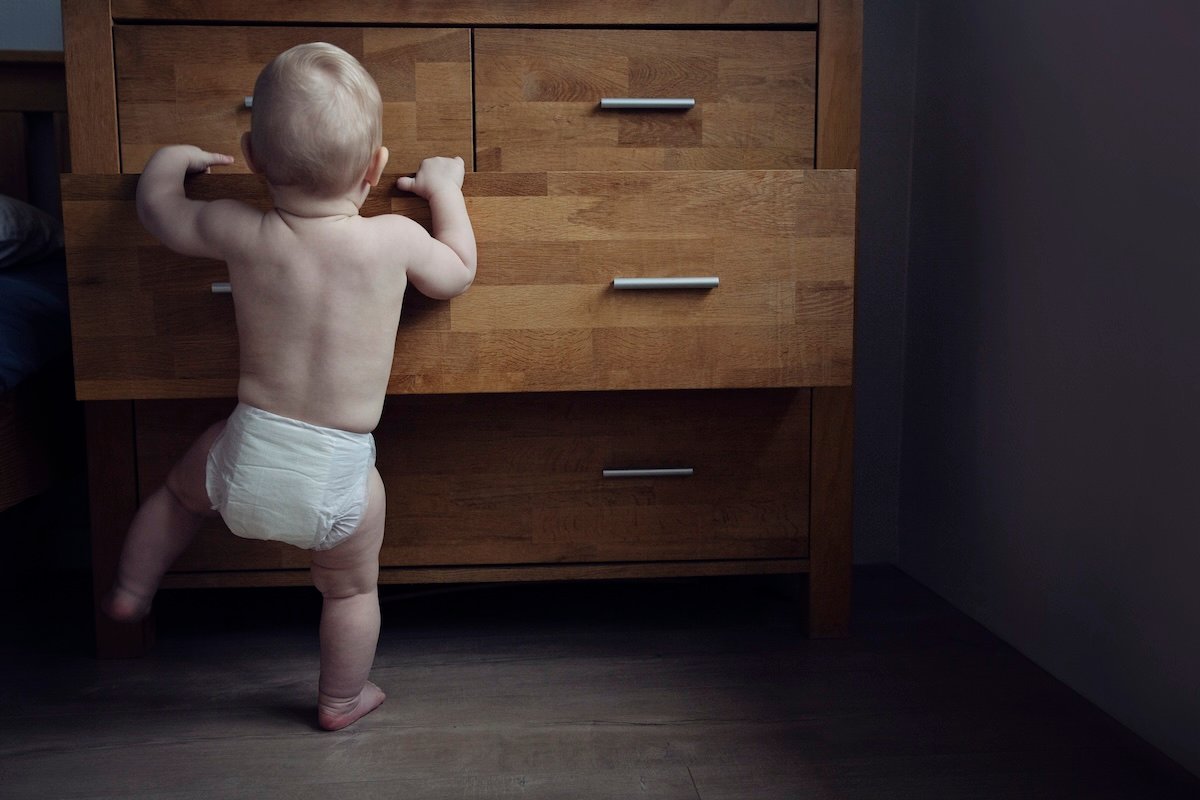
Kids are resourceful. If they know something they want to play with is stored up high, they won’t hesitate to drag a chair or ladder over to gain access. And now you have 2 concerns: a fall from the chair or ladder, and them getting into something they shouldn’t.
When you’re thinking about how you’re storing your firearms, think like a kid. Are there things nearby they could use to gain access? Are you counting on their short height (which changes over time)? How will your solution age with your kids?
When kids start crawling, parents are often told to try crawling around on the floor and see what their child can access. From electrical outlets to long-dropped-and-forgotten medications, a lot of dangers can be prevented just by seeing the world through your child’s eyes.
Have Hard Conversations
McDaniel says another safeguard that can make a big difference is “Asking about firearm storage in the homes of friends and family before allowing their children to visit.”
If your child had an allergy, you hopefully wouldn’t hesitate to make sure others knew. You also would most likely ask if they’d stored away anything that could be dangerous.
So why is it so much harder to force the words out when you’re asking about gun safety? “Are all firearms secured?” isn’t any harder to say than “You’ve put up your peanut butter, right?”
It’s possible they’ll get upset. They might wonder why you assumed they had a firearm. Think of that as an opportunity to help others. There are responsible gun owners across every demographic. Being a responsible parent is about making sure you know about any firearms your child could access.
Be Receptive to Others’ Questions
At a well-child visit, I’d expect my pediatrician to ask me if I had a pool. And if I answered yes, I’d expect them to ask if I had a fence around my pool and if I always secured the gate.
Questions about firearms should be asked the same way. If you have them, it increases the risk of an accident, just like a pool increases the risk of drowning. Making sure a weapon is secure is about the health and safety of your child, which is your pediatrician’s biggest concern.
And a parent who asks if you have unsecured firearms before letting their child spend the night? That’s a parent who prioritizes child safety over their own comfort, which makes them a good person to know.
Know When Secure & Safe Isn’t Enough
Unfortunately, a lot of the children killed by guns weren’t killed in an accident. For kids with depression, guns can seem like an easy solution to complicated emotions. And if your child is a teenager, there is no place you can reach or access that they can’t. They’re resourceful, observant, and impossible to supervise 24/7.
They also struggle with impulsivity and strong emotions.
McDaniel says, “For teenagers, impulsivity heightens the risk, as firearms are the most lethal means of suicide. Temporary distress can lead to permanent results, so ensuring they do not have access to firearms is critical to their safety.”
If your child has expressed emotional concerns or if you’ve just noticed they seem different recently, you need to get firearms out of the house.
Off-Site Gun Storage
Some kids can get into anything, no matter how well you secure it. And if they seem focused, it may be impossible to find a space in your home that they won't search for. When you’re in a situation like this, off-site storage is a great option.
You’ll want to find gun-specific storage. Many shooting ranges offer locker rentals. Several nonprofits and companies have emerged that will also temporarily store your guns.
You don’t want to use a self-storage or other unsecured storage facility. In addition to it being illegal to do so in some states, it also creates a scenario where the weapon could be easily stolen.
Finding the Best Solution for Your Family
As long as guns remain the biggest threat to the safety and health of children, pediatricians need to stay focused on it. Parents are equally invested. And when that relationship is built on trust and collaborative problem solving, children are safer, healthier, and happier.
If you’re a parent who owns firearms, think of your pediatrician as a resource who can offer advice that helps keep your child safe.