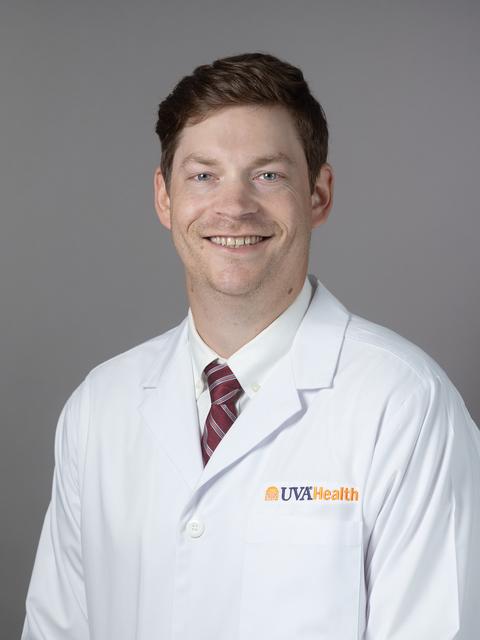
Alexander J Henry, MD
Urology
Additional Locations
Bio & Overview
Alexander Henry, MD, is a urologist who specializes in general urology, benign prostatic hyperplasia (BPH), and kidney stone disease. He has extensive experience with complex stone surgery, including PNCL and robotic surgery, and a wide variety of endoscopic BPH procedures.
“I approach each patient as if they were a family member,” he says. “When thinking about a treatment plan, I like to ask myself, ‘If this was my parent, would I feel this physician had their best interest at heart?’ If the answer is no, then I need to make adjustments.”
Dr. Henry grew up in Hagerstown, Maryland, where he enjoyed snowboarding and playing soccer and lacrosse. He was drawn to the field of urology by its innovative use of technology and the personalities of those who practice the specialty.
Dr. Henry attended medical school at the University of Maryland and completed his urology residency at UVA Health.
Academic Information
- Department
- Urology
- Academic Role
- Assistant Professor
- Division
- Urology
Conditions & Treatments
- Benign prostatic hyperplasia
- Bladder stone
- Bladder stone removal
- Bph surgery
- Calculus of urinary tract
- Cystolitholapaxy
- Encysted hydrocele
- Endoscopic surgery for ureteropelvic junction obstruction
- Endourology
- Enlarged prostate
- Frequency of urination
- Hydrocele
- Hydrocele repair
- Hydrocelectomy
- Hydronephrosis
- Hydroureter
- Hydroureteronephrosis
- Incomplete emptying of bladder
- Increased frequency of micturition
- Kidney stone
- Kidney surgery
- Laser enucleation of prostate
- Laser lithotripsy
- Laser prostate surgery
- Laser vaporization of prostate
- Lower urinary tract symptoms (luts)
- Male sterilization
- Minimally invasive kidney stone removal
- Minimally invasive kidney surgery
- Nephrolithotomy
- Pelviectasis
- Prostatic hyperplasia
- Prostatic hypertrophy
- Prostatic obstruction
- Pyelocaliectasis
- Rezum
- Robotic pyeloplasty
- Robotic surgery
- Robotic surgery for upj repair
- Slowing of urinary stream
- Spermatocele
- Straining on urination
- Strictures of upper urinary tract
- Testicular hydrocele
- Testicular swelling
- Ureterolithiasis
- Ureteropelvic junction obstruction
- Urinary hesitation
- Urinary retention
- Urolift (bph)
- Vasectomy
- Gender
- Male
- Languages
- English
- Age Groups Seen
- Adults (21-65)
Older Adults (65+)
- Primary Education
- University of Maryland School of Medicine (2019)
- Residency
- University of Virginia Medical Center (2024)
Highlights
Meet Alexander Henry, MD
My name's Alex Henry. I'm a urologist here at UVA Health. The patients that I see primarily come in with kidney stones. I see kidney stones of all complexity, as well as benign prostatic hyperplasia and urinary complaints related to that issue. I offer a wide array of procedures for benign prostatic hyperplasia and urinary obstruction. I additionally offer every available procedure for kidney stones, including percutaneous nephrolithotomy for large complex stones. What attracted me to urology initially was the people. Urologists get to work with a lot of very interesting technology. Urology has been on the forefront of medical technology, specifically with the da Vinci robot. We were one of the first fields to really start utilizing that, it revolutionized the way that we do a radical prostatectomy for prostate cancer. Once we start a process and we're working on an issue, we solve that issue and if that requires extra work I put that extra work in. The other thing I'm very passionate about is making sure that my patients are well informed. Patients benefit from coming to UVA because of the collegiality between different departments which leads to excellent collaboration. If you come to UVA and you have a urologic issue, but you also have an issue that's outside of my field of practice, I typically know who I can send you to, where to send you, and I also know that you're going to receive excellent care from that person.
Reviews
456 Patient Satisfaction Ratings
Our patient satisfaction ratings are an average of all the survey responses to the below questions a provider got within the past 2 years. To protect your privacy, patients aren't identified.
See more about our patient satisfaction surveys .