New, Noninvasive Options Show Promise for Treating Substance Use
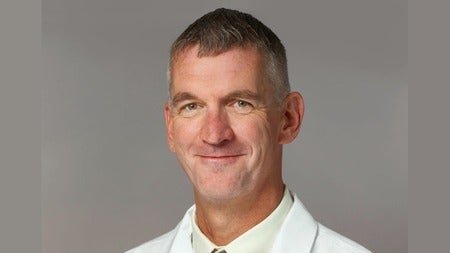
James J. Mahoney, PhD, is director of UVA’s Center for Neuromodulation Research.
Doctors may be able to use focused sound waves and other noninvasive forms of “neuromodulation” to treat substance use disorder and reduce drug and alcohol cravings, according to UVA Health researchers on the front lines of this groundbreaking work.
Scientists leading UVA’s Center for Neuromodulation Research have surveyed the state of their emerging field in a pair of new scientific papers. They highlight the potential of two neuromodulation techniques, focused ultrasound and vagus nerve stimulation, to target the underlying drivers of addiction.
The focused ultrasound approach uses highly precise sound waves to reset reward centers in the brain. Vagus nerve stimulation, on the other hand, stimulates an important cranial nerve to regulate how the brain responds to stress via the release of serotonin and other neurotransmitters.
“Findings have shown that these different forms of neuromodulation have great potential in reducing drug craving and use and also reduce other emotional symptoms like depression and anxiety,” said center Director James J. Mahoney, PhD, a clinical neuropsychologist with the Department of Psychiatry and Neurobehavioral Sciences at the UVA School of Medicine. “Neuromodulation provides another treatment option for those who don’t have success with the standard of care, especially for those with stimulant use disorder, which doesn’t currently have any medication treatments available.”
Noninvasive Options for Substance Use Disorder
Vagus nerve stimulation is a time-tested medical treatment first developed in the late 1800s. But it was only in 1997 that the federal Food and Drug Administration approved an implantable nerve stimulator to treat medication-resistant epilepsy. After that, doctors noticed that recipients often showed improvements in mood, leading to the approval of the implantable stimulator for treatment-resistant depression in 2005. Now researchers believe vagus nerve stimulation could benefit people with substance use disorder.
Vagus nerve stimulators can be costly and require surgery for implantation as well as additional procedures when the battery needs replaced. Researchers have developed more affordable, non-invasive alternatives, however, that eliminate the need for surgery. One such device is already FDA-approved to help manage opioid withdrawal symptoms. These new approaches stimulate the vagus nerve either through the ear or via the neck and could potentially be used at home to help people with substance use disorders manage symptoms such as depression and poor sleep.
Researchers are also investigating low-intensity focused ultrasound as a non-invasive approach to neuromodulation in substance use. This form of focused ultrasound uses precisely targeted sound waves to modulate activity in specific brain regions involved in reward, motivation and addiction.
Unlike high-intensity focused ultrasound, which uses thermal energy to remove tissue to treat disorders such as Parkinson’s and essential tremor, low-intensity focused ultrasound is designed to influence brain activity without damaging or destroying tissue.
Based on their review of the existing research, Mahoney and the center’s associate director, Daisy Thompson-Lake, PhD, found there is encouraging evidence, albeit preliminary, for the potential of both approaches. They say larger studies are needed to explore how these techniques could be used to complement existing substance use treatments and make it easier for people to manage cravings and, ultimately, stop using drugs.
About the UVA Center for Neuromodulation Research
Much more needs to be done before the new approaches could become available to patients, but the UVA Center for Neuromodulation Research is already on the front line of that work. Mahoney and Thompson-Lake founded the center just a year ago, but it has already launched an aggressive research program. The researchers have established several industry partnerships, secured more than $200,000 in funding and designed and deployed a mobile app that can capture important data about volunteers’ cravings and mood in real time.
The center builds on UVA’s long history at the forefront of focused ultrasound research. For example, UVA’s work already paved the way for federal approval of focused ultrasound for treating both Parkinson’s and essential tremor. UVA is also home to the Focused Ultrasound Immuno-Oncology Center (FUSION), the world’s first center devoted specifically to using focused ultrasound to enhance immunotherapy treatments for cancer.
Now Mahoney and Thompson-Lake hope to bring similar innovation to the battle against substance use disorder – a condition that affects almost 50 million Americans. Their first vagus nerve stimulation study is set to start recruiting this fall, and focused ultrasound studies won’t be far behind, projected to begin in early 2027.
Whether it is focused ultrasound, vagus nerve stimulation or another noninvasive technique, the UVA researchers are working to find ways to help people across Virginia and far beyond.
"We started with substance use disorder, but our ambition is much larger: to bring the same rigorous science to other psychiatric conditions like post-traumatic stress disorder, obsessive-compulsive disorder and eating disorders, where people are too often left without options that work," Thompson-Lake said. "That is why we have built partnerships with device companies across the neuromodulation space; so we can ask the questions that get these treatments to patients safely and give people a reason to hope again."
Findings Published
The UVA researchers have published their findings in the scientific journals Drug and Alcohol Dependence and Biological Psychiatry.
Learn more about the Center for Neuromodulation Research at UVA.
To keep up with the latest medical research news from UVA and UVA’s new Paul and Diane Manning Institute of Biotechnology, bookmark the Making of Medicine blog at https://www.uvahealth.com/making-of-medicine.
Article Topics
Media Contact

Joshua Barney
Deputy Public Information Officer