Why Kidney Disease Patients Die of Heart Problems
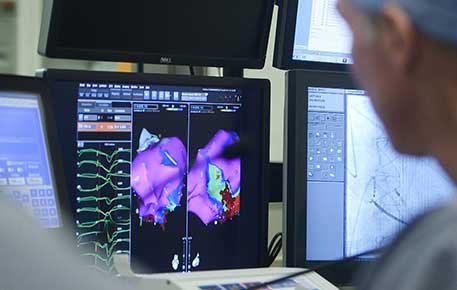
A doctor looks at heart imaging.
Our Uta Erdbrügger, MD, and colleagues have discovered why more than half of patients with chronic kidney disease ultimately die of cardiovascular problems: Their kidneys poison the heart.
The connection between CKD and cardiovascular problems is well known. In fact, the severity of cardiovascular disease directly correlates with CKD. But shared risk factors such as high blood pressure and obesity have made it hard for scientists to understand what was happening. They have, until now, been unable to pinpoint a kidney-specific risk factor that was harming the heart.
Dr. Erdbrügger's new research reveals the culprit: particles called “circulating extracellular vesicles” produced in ailing kidneys.
Extracellular vesicles are produced by almost all cells. They transport proteins and other materials where needed. But the extracellular vesicles produced in kidneys with CKD carry small, non-coding RNA called miRNA that are cardiotoxic -- harmful to the heart.
The discovery could let doctors ID patients at risk and could lead to new treatments to prevent and treat heart failure. “Kidney and heart disease can develop silently, so they are often discovered only after damage has already been done,” Dr. Erdbrügger told me. “Our findings can help to identify patients at risk for heart failure earlier, enabling earlier treatment and improved outcomes.”