Focused Ultrasound for Parkinson's Tremor
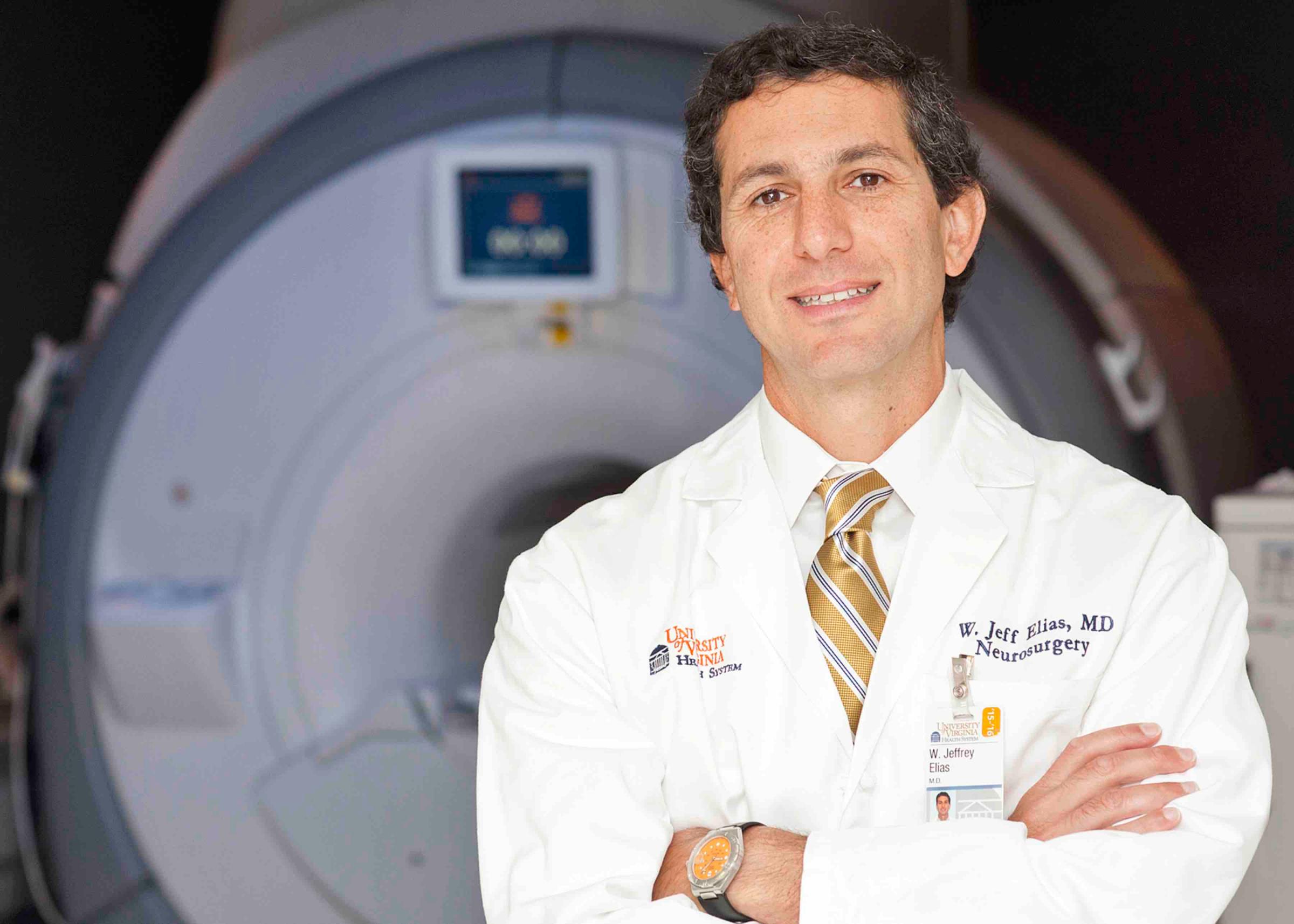
Neurosurgeon Jeff Elias, MD, has been an important pioneer in the development and testing of focused ultrasound.
A few years ago, our Dr. Jeff Elias conducted the first test of focused ultrasound for the treatment of the most common movement disorder, a condition called essential tremor. A trial participant went into an MRI machine with a hand that shook so violently he couldn't feed himself cereal. When he came out, he could do a crossword puzzle in the recovery room.
As you might imagine, response to this news was tremendous. We were overrun with phone calls from people who wanted to join the clinical trial, from people who wanted to know if this approach could help their loved ones, from people who wanted to know if focused ultrasound could be used for other conditions. In particular, a lot of folks wanted to know about Parkinson's disease: Could focused ultrasound help with those tremors?
Five years later, focused ultrasound is FDA approved for the treatment of essential tremor, and Dr. Elias has wrapped up his first clinical trial looking at the safety and effectiveness of focused ultrasound for managing tremor in tremor-dominant Parkinson's. And things look promising.
In a nutshell, trial participants who received the scalpel-free form of brain surgery saw a 62 percent median improvement in their hand tremor three months later. That's significant -- Dr. Elias says it could make the difference in being able to write or not being able to write. One complication, though: Trial participants who underwent a sham procedure -- meaning they thought they received the procedure but didn't -- also improved. It was to a lesser degree, but they improved, suggesting there was a placebo effect. (The trial participants who received the sham procedure were later offered the opportunity to receive the real procedure.)
So what does all that mean? Dr. Elias' team concluded that further research is warranted. That sets the stage for a larger study that will shed more light. For now, the researchers say it appears the approach is most likely to benefit patients with Parkinson's that is well controlled by medication but for whom tremor reduction alone would improve their quality of life.
We'll keep you posted as the work continues.