Alzheimer's Discovery Reveals Faulty Trash Removal
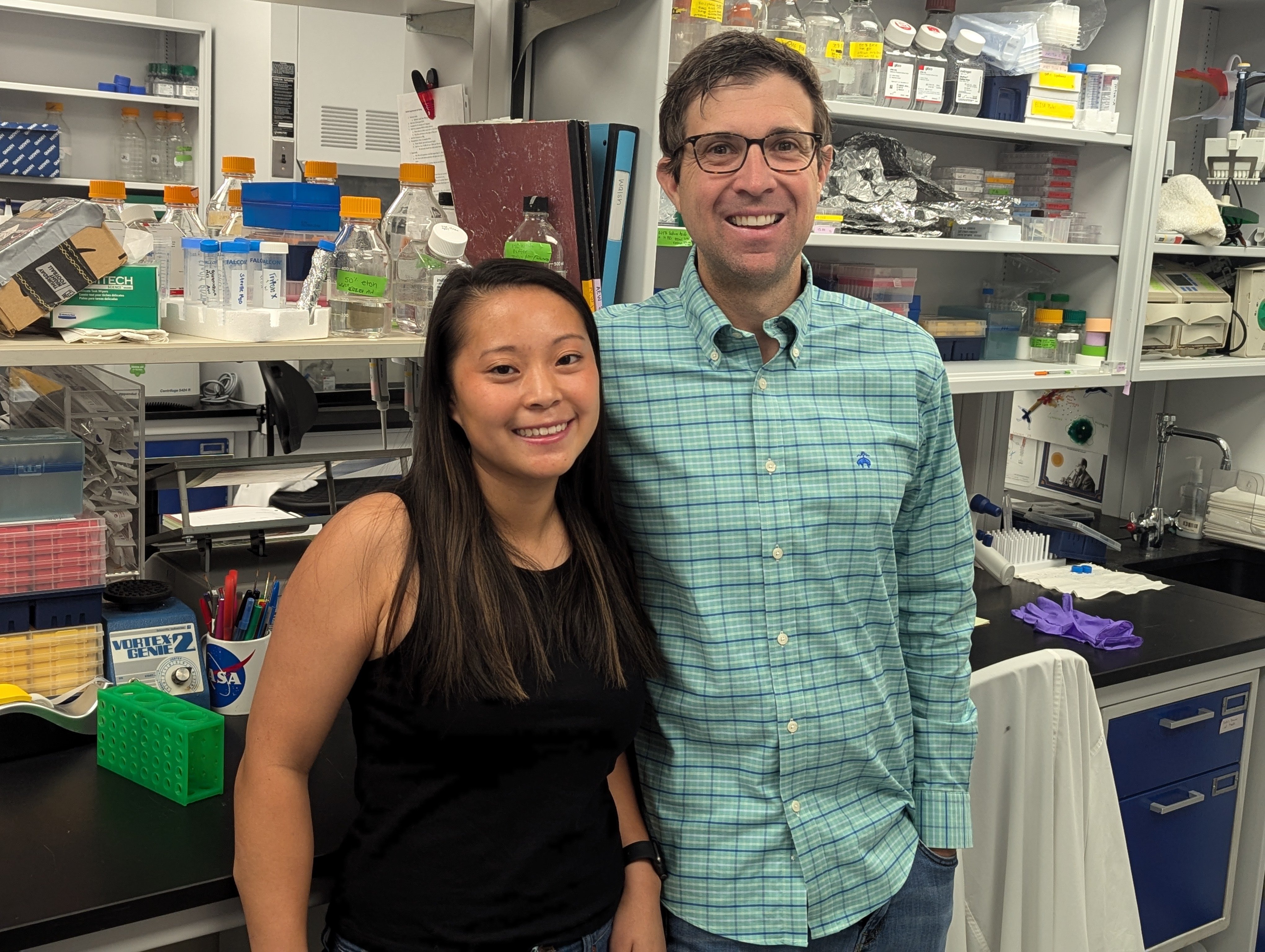
Researchers John Lukens, PhD, and Addie Walsh have shed important light on how problems with the CASS4 gene can impair the brain's ability to clean itself. This could lead to new approaches to preventing and treating Alzheimer's disease.
Our John Lukens, PhD, and his team have shed light on how a genetic risk factor for Alzheimers' can contribute to the development and progression of the disease.
Lukens, the director of UVA’s Harrison Family Translational Research Center in Alzheimer’s and Neurodegenerative Diseases, examined the effects of the CASS4 gene after it was identified as an Alzheimer's risk factor in numerous studies. The researchers found that the gene plays a critical role in directing the compaction and removal of harmful debris in the brain. When the gene's workings were disrupted, immune cells called microglia could no longer effectively respond to harmful amyloid-beta plaques forming in the brain. That allowed the plaques to grow more quickly and spread more aggressively.
Normally, the microglia form protective barriers around the plaques and smush them down as small as possible. This minimizes the harm the plaques can cause. But Lukens’ new research suggests that faulty or ineffective variants of the CASS4 gene can leave the brain unable to perform this essential housecleaning.
“Despite CASS4 being an Alzheimer’s risk gene, really nothing is known about what this gene does or how it affects the brain during disease. Our lab sought to address this major knowledge gap with this paper,” said researcher Addie Walsh, UVA physiology graduate student. “These are important findings because they give us new insight into how this understudied AD risk gene functions in the brain and suggest that CASS4 may normally help microglia respond to amyloid pathology.”
he microglia in the brain to help slow or prevent the development of Alzheimer’s.
“We are now actively exploring potential roles for CASS4 in multiple other neurodegenerative disorders and developing novel strategies to therapeutically target it,” Lukens told me. “Many in the field initially presumed that CASS4 was likely functioning in neurons to influence Alzheimer’s. Our findings shift this paradigm by proving that CASS4 predominantly acts through the immune system. This is particularly exciting, as it has only been in recent years that immune-targeting strategies have been considered for the treatment of neurodegenerative diseases, and this remains an untapped therapeutic avenue with tremendous potential.”