Novel Treatments for Pediatric Patient with Refractory Relapsed Burkitt’s
Burkitt’s lymphoma encapsulates the duality of pediatric cancer outcomes. Most forms are incredibly treatable, with a 90% cure rate. Burkitt’s aggressiveness is met in-kind with aggressive chemotherapy treatments.
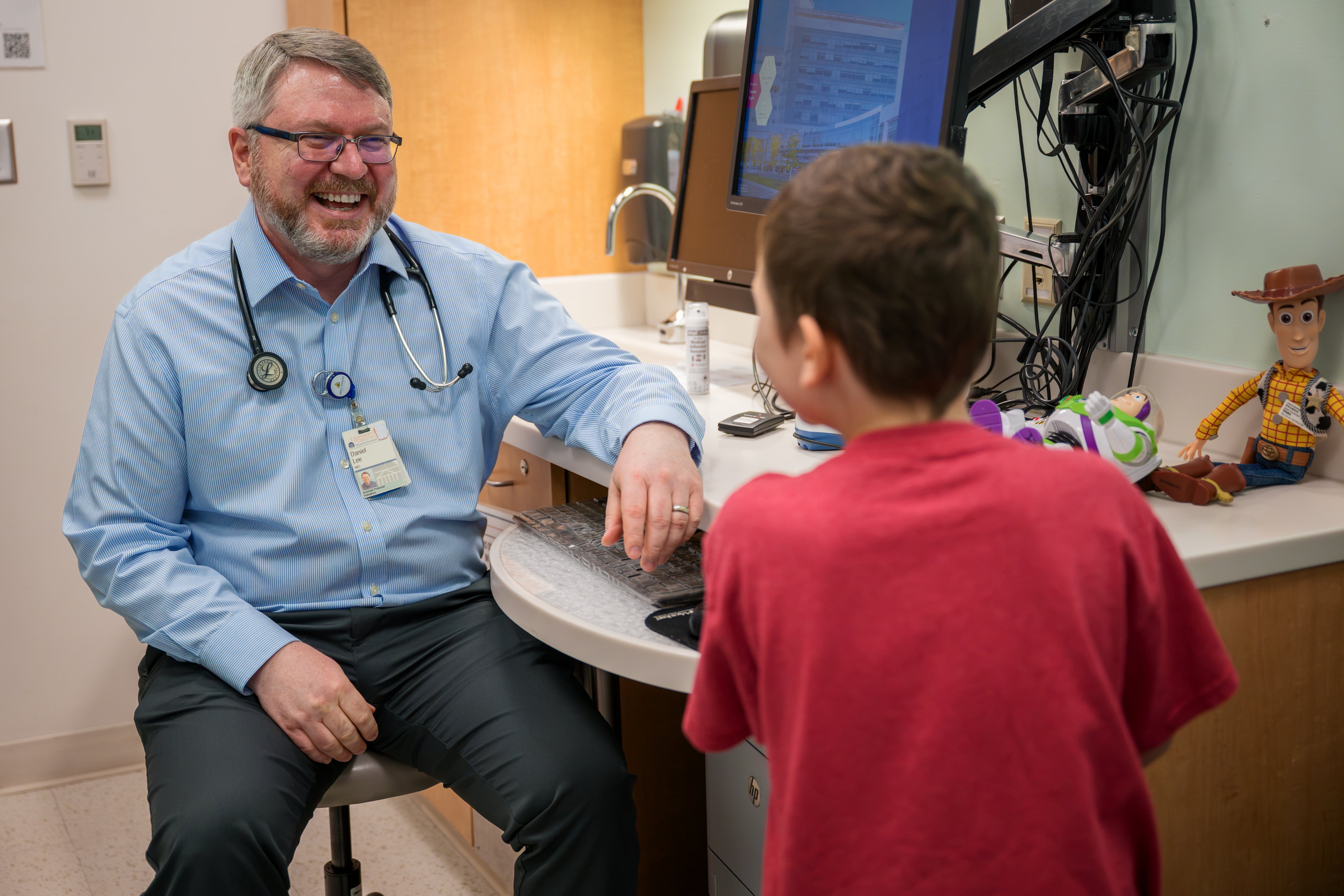
For those with primary refractory Burkitt’s, a remission never comes, and the toxicity of the treatment means other options are no longer possible. Daniel “Trey” Lee, MD, shares “For those patients, there’s not much hope with standard chemotherapy agents, because they’re so resistant to it.”
The option most commonly pursued is salvage chemotherapy, which can have devastating side effects and still conveys a poor prognosis.
When an 8 year old boy came in with Burkitt’s that didn’t respond to initial chemotherapy, the pediatric oncology team at UVA Health Children’s developed a combination of novel treatments. His outcome was so exceptional, Lee is hoping it presents a potential avenue of treatment for a pediatric cancer that has been a challenging outlier.
Burkitt’s Treatment Limitations
Burkitt’s is an incredibly aggressive cancer. Lee says, “One of the other challenges with Burkitt’s that's unique to this disease is that it's the fastest growing human cancer. Every 24 hours it can double in size. So, the standard treatments we use are really intense. And because of that, unfortunately they cause a lot of toxicities.”
For children who stop responding to initial therapy, intensified salvage chemotherapy often makes other treatment options, like a stem cell transplant or T-cell collection for CAR T cell therapy, impossible. Patients are also at significant risk from life-threatening complications.
Sometimes, the treatment itself is fatal.
The Short Diagnostic Journey
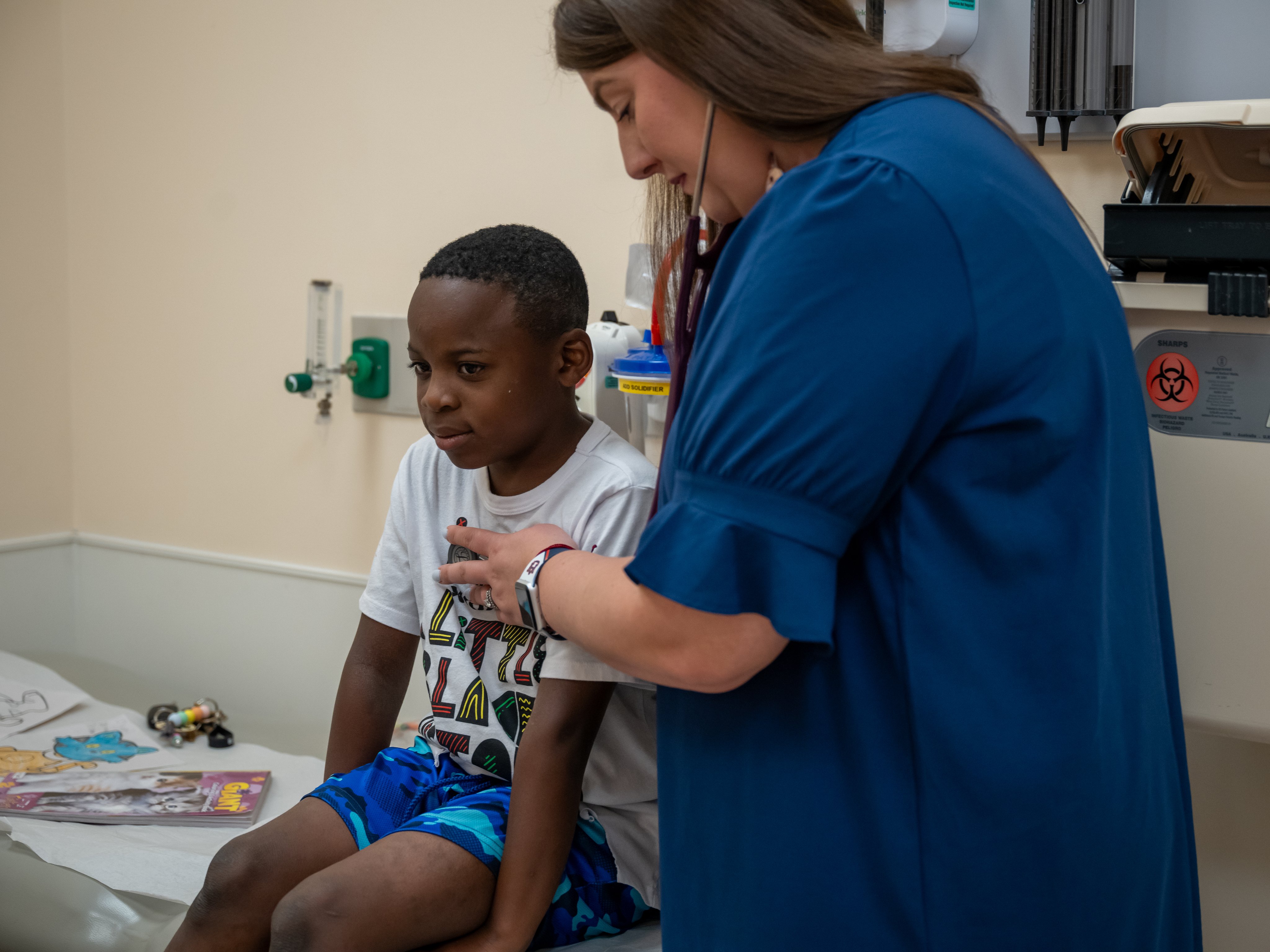
Burkitt’s aggressiveness means it tends to be diagnosed quickly. For Joshua’s family, the battle started with what seemed like a recurring stomach bug. But the symptoms quickly progressed to breathlessness, lethargy, bruising, and a general sense that something wasn’t right.
It was Joshua’s mom, Chelsea, who first put to words the fear of leukemia or lymphoma. The hospital she’d brought Joshua to told her to take him to UVA Health Children’s, and shortly after arrival, the emergency room doctor confirmed what she’d suspected. Her 8-year-old son was in the fight of his life against his own cells.
The relief the family felt at finding out it was Burkitt’s, with a 90% cure rate, was short-lived. After 4 rounds of chemo, Joshua seemed sicker than ever. When fluid came out of his biopsy site, they returned to the hospital expecting infection. But what the surgical team found was much more alarming.
The cancer was spreading. And because of how far it had spread, the surgical team couldn’t remove all the cancer cells.
Lee entered the family’s life with the toughest news they’d heard yet. “I think we might be dealing with primary refractory disease,” he’d said.
Those words took Joshua’s chance of survival from 90%, to just 10%.
Exploring All Treatment Options
Salvage chemotherapy has been the standard for primary refractory and relapsed Burkitt’s. But for Joshua that meant little hope for survival and a certainty of the painful side effects that accompany more chemotherapy. The first-line chemotherapy for Burkitt’s is aggressive, but the salvage chemotherapy is even more so.
Lee knew that pursuing salvage chemotherapy meant that Joshua’s Burkitt’s wouldn’t be curable. For a cure to be had, they’d need to get Joshua into remission and get a stem cell transplant. But the toxicity of the chemotherapy regimen could leave Joshua an unsuitable transplant candidate.
Lee and the family both weighed their options as Joshua recovered from the surgery he’d needed to remove as much of the tumor as possible.
Chelsea found an article in the New England Journal of Medicine that was just published about a novel combination of immunotherapies that had been tried for 3 adult patients. All 3 went into remission and received stem cell transplants. They were alive.
She brought it to Lee. It had only been done in adults, and there were only 3. But he agreed to look into it.
International Collaboration
Lee reached out to colleagues around the globe who had more experience with each of the immunotherapies used. Polotuzumab vedotin delivers a toxin payload specifically to cells expressing CD79a, a protein on Burkitt’s, and glofitamab is a T-cell engager that directs T cells to CD20-expressing lymphoma cells for killing. When taken in combination they’re referred to as PV/Glo. Since it had never been trialed in a pediatric patient, Lee and the experts came together to reach a conclusion on the correct pediatric dosing.
Together, they developed a protocol.
Because the medications weren’t FDA-approved for pediatrics, the team had to obtain a one-time compassionate use authorization for these medications. And then, it was official. Joshua was approved to be the first pediatric patient to get PV/Glo.
Always Think Ahead
While the team was working through the FDA approval and Joshua was recovering from surgery, Lee saw a time-sensitive opportunity. Lee is one of the world’s foremost experts in CAR-T cell therapy. And he reasoned that at some point in Joshua’s journey, he might need a back-up treatment.
“And this is the problem with Burkitt’s,” Lee shares. “Because of how fast it grows you have to keep hitting these patients very hard and very fast with a lot of chemo. It doesn’t allow time in between to be able to pause and collect their T-cells.”
But during this time, there was a window. So, Lee collected and cryopreserved Joshua’s T-cells in UVA’s specialty cell lab.
PV/Glo Therapy Begins
“PV/Glo was a new therapy that hadn't been tried, as best we know, in children yet,” Lee says. “So, we wanted to be really cautious about this. We gave him the first cycle of this in the hospital so that we could closely monitor him in case there were any unknown side effects.”
But unlike the chemo that had taken Joshua’s hair, ability to eat, and youthful energy, PV/Glo let him be a kid.
Lee shares, “It was so safe actually that we actually gave his subsequent cycles outpatient here, in the Battle Building clinic. At home in between treatments he was playing Star Wars and, fighting off the enemies with his lightsaber and having a great time, which is really rewarding.”
Relapse & Changing Gears
PV/Glo made for a smoother treatment, and it got Joshua into remission. But then he relapsed. His disease had lost CD20 making glofitamab ineffective.
The preserved T-cells, though, meant there was another option for Joshua. If CAR-T could help get Joshua into remission, a stem cell transplant would offer a true cure. But only a handful of kids with Burkitt’s have been treated with a CAR T therapy, and most of them don’t survive. Lee wanted to see if he could help Joshua’s CAR T cells work better.
For the next step forward, the team had to circle back to the beginning. Lee partnered with the Department of Pathology, and they took another look at the tissue sample from Joshua’s surgery. What they found was a preponderance of infiltrating immunosuppressive cells. These could prevent CAR-T from being successful.
But two medications already approved for use in pediatric patients could target those cells, potentially allowing a chance for the CAR-T to work. Lee calls this new combination therapy T-ATAX.
T-ATAX a combination that had never been tried all at the same time. Joshua stayed at the hospital for close monitoring afterwards. But with no side effects, he was discharged home. Through outpatient visits, they monitored closely.
Finally Cured
Chemotherapy, PV/Glo, and T-ATAX behind him, Joshua finally entered a stable remission. During that time, he was able to get the bone marrow transplant that signaled a true cure. And, at 8 years old, Joshua rang his bell.
The event was a hospital-wide celebration. The teams that came together to make treatment a success, Joshua’s supportive family, including the brother who donated his bone marrow, and of course, Joshua.
Lee shares, “I think he’s probably one of the bravest kids I've ever met. We asked him to do a lot that a seven- or eight-year-old should never be asked to do. And he did it with grace.”
The Pursuit of Less Toxic Treatments
One of the aspects of this patient’s journey that Lee is most excited about is how the newer treatments brought on fewer negative side effects. With both PV/Glo and T-ATAX, Joshua improved without the often devastating side effects of intensive chemo used for relapsed Burkitt’s.
“But this is just one patient,” Lee cautions. In this instance, Joshua’s options were limited and the team was reaching for anything. What they got was an incredible outcome. The results are so fantastic that Lee is looking forward to talking about this case and treatment more with his peers.
This is the sort of patient story that brought Lee to pediatric oncology. “To address those unmet needs in pediatric cancers, so we can help those kids we couldn’t help before.” And when it can be done with treatments that allow children to thrive, that’s even better.
Since sharing Joshua’s story, other oncologists have talked to Lee about how to replicate these protocols for their primary refractory and relapsed Burkitt’s patients. With more data, a less toxic treatment may be on the near horizon.
Article Topics