Creating Thumbs Using Index Pollicization
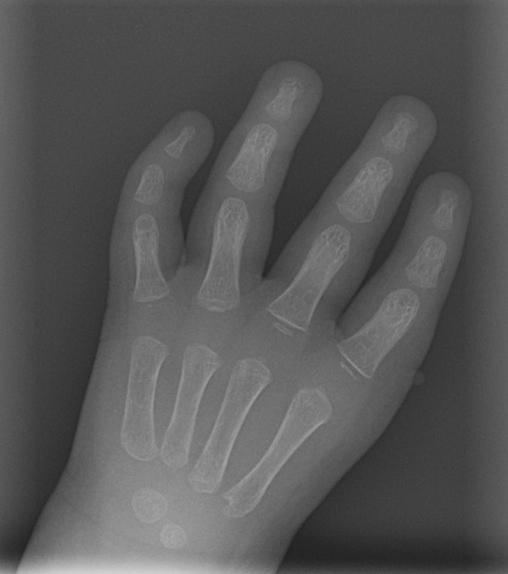
Connor Woodle's hand prior to surgery
Thumb aplasia is a rare congenital defect — occurring in one out of every 100,000 births — in which a child is missing one or both thumbs. Because the condition is so uncommon, few surgeons get an opportunity to develop the advanced skills required to treat it effectively. In his career as an orthopaedic surgeon specializing in congenital hand abnormalities, Bobby Chhabra, MD, chair of the UVA Department of Orthopaedic Surgery, has treated more than a dozen of these young patients.
“I have been seeing kids with congenital hand conditions since 2002,” says Chhabra, co-creator of UVA Hand Center. “It is one of my passions and I’ve really made it one of the focuses of my practice because it’s very gratifying for me. ”
One of the more challenging patients with thumb aplasia Chhabra has treated, Connor Woodle was referred to UVA Hand Center at just two weeks of age. He was missing not one, but both of his thumbs.
“The absence of two thumbs is unusual,” says Chhabra. “The question I had immediately was, ‘What can we do to ensure Connor leads a normal, healthy, high-functioning life?’”
Because these kids often have other problems as a result of other genetic abnormalities, which may impact the heart, lungs, kidneys, spine or legs, Chhabra turned to a team of UVA specialists, including geneticists, developmental pediatricians, therapists and others, who helped ensure Connor received a comprehensive evaluation.
“You really need a team of people,” says Chhabra. “I just take care of the hands, wrists and elbows, so it’s comforting for me to know that these patients have access to leading specialists at UVA that can give them the best possible all-around care.”
Opting to Treat
Over the course of a year, Connor adapted to his missing thumbs by using two fingers as pincers to grasp objects. What he lacked, however, was the dexterity and strength only thumbs can provide.
“The hard part is determining whether these kids need surgery, and if so, what is the best option,” says Chhabra. “The goal is to improve function, and not just the cosmetic appearance. If a procedure decreases functionality, then you’re doing a disservice to the child.”
In discussing Connor’s options for treatment with his parents, Jason and Joan Woodle of Charlottesville, Chhabra shared that there was one procedure called index pollicization that he believed could give Connor almost complete and normal use of his hands. “Pollicization is one of the most fascinating operations I’ve ever seen and one of the main reasons I went into hand surgery,” says Chhabra. “It isn’t a lifesaving procedure like heart surgery, but if you have a good outcome it could change a child’s life,” says Chhabra.
The Surgery That Gave A Boy Thumbs
Creating Thumbs from Fingers
Index pollicization is a complex microsurgical procedure that has been perfected over decades. It involves separating the index finger from the hand and rotating it with its nerves and blood vessels into the position of the thumb. Then, the surgeon must recreate the muscles and tendons to create a new thumb for the child.
Operating on child-sized hands brings a host of challenges, which increase the risks. “The tiny vessels and nerves in the finger must be carefully protected. If the blood supply is disrupted, then you could lose the digit, which would be devastating for the patient and the family,” explains Chhabra. “There is also the risk of infection and poor function.”
Connor’s parents were well aware of the risks, but opted to put their son’s hands in the hands of Dr. Chhabra. Thus, just after his first birthday, Connor underwent the first pollicization procedure, which lasted approximately five hours. Six months later, he had the second procedure on the other hand.
The initial recovery period for each operation wasn’t all that significant considering the complexity of the procedure; Connor wore a cast for a short time to allow his hands to heal. Chhabra says what was most challenging for Connor was developing the use of his new hands. His age was an advantage. Because he was still so young, his brain adapted and allowed him to utilize the finger in its new position. As a child gets older, the brain is less likely to adjust to the altered anatomy so the timing of an index pollicization is important.
Throughout Connor’s recovery, the Woodle family worked extensively with UVA occupational therapists and also engaged Connor in activities at home, such as picking up Cheerios, to challenge him to grasp objects using his new thumb. The outcome was better than they could have hoped. “By six months, Connor was using his index finger like a thumb,” says Chhabra. “By one year, you could barely notice that he was missing a digit on each hand. He had a dramatic improvement in the function and appearance of both his hands.”
UVA Hand Center sees approximately 20,000 patients annually and is one of the few centers in the state offering the full complement of congenital hand surgery and comprehensive care for the hand, wrist and elbow.
Subscribe to Healthy Practice
Get UVA Health news & information specifically for referring physicians